Buy Now And Get Free Shipping! Buy Now And Get Free Shipping! Buy Now And Get Free Shipping!

Author name: baly.shergill

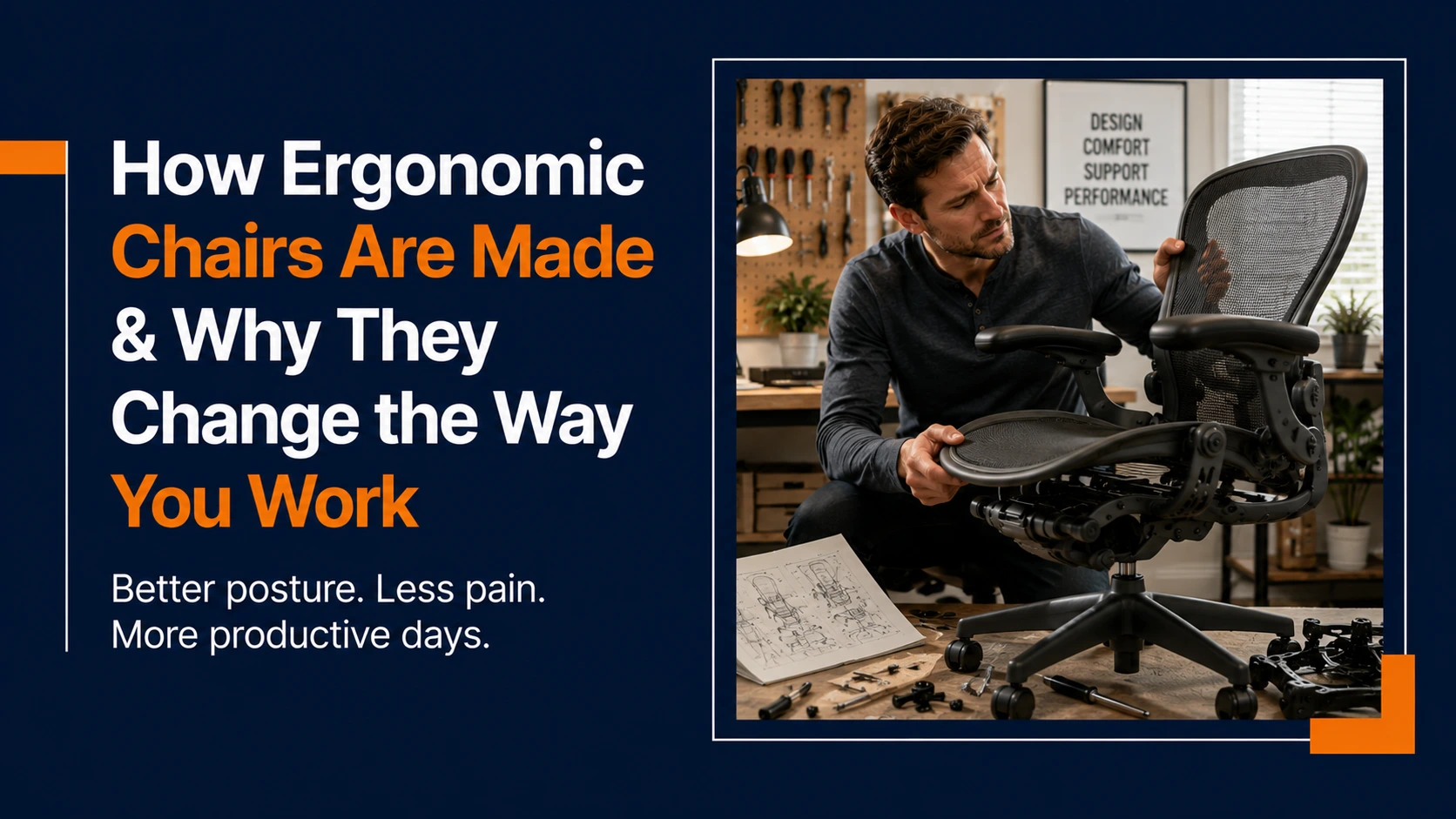
How Ergonomic Chairs Are Made
Blog

From a Basic Desk Chair to an Ergonomic Workhorse: How Office Chairs Got So Smart

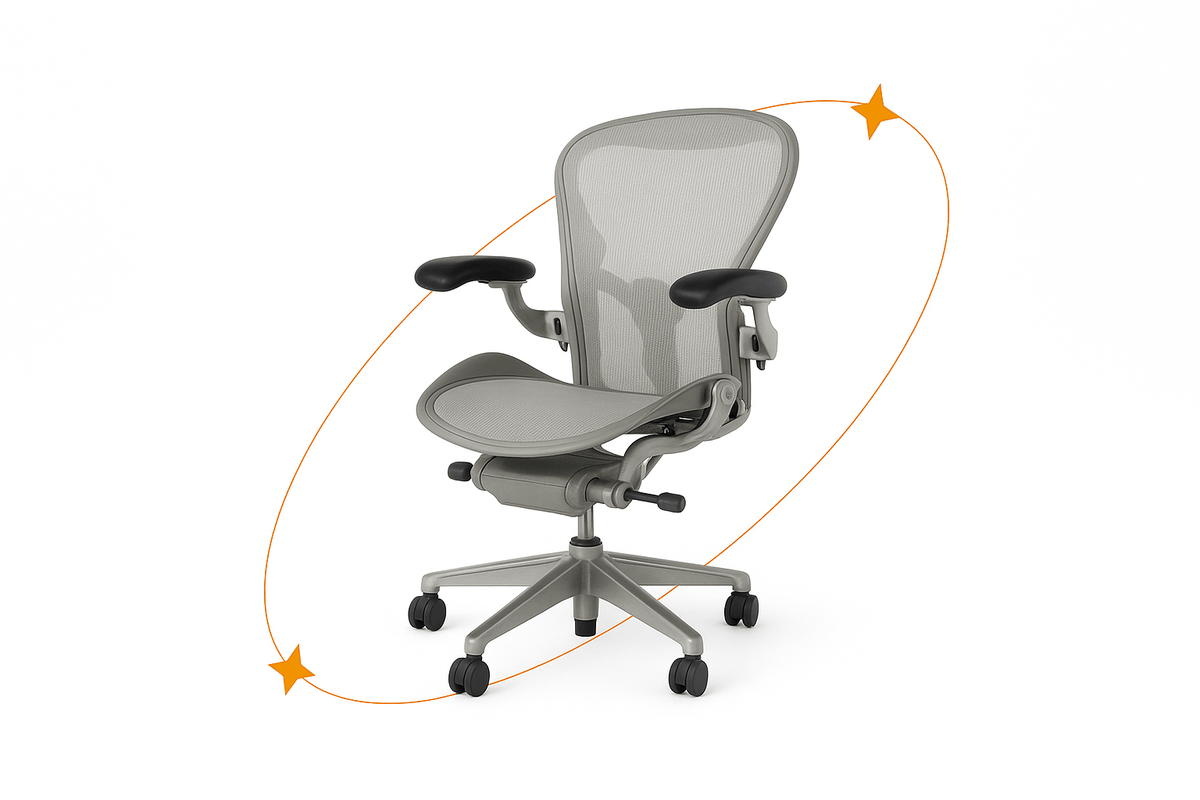
From a Basic Desk Chair to an Ergonomic Workhorse: How Office Chairs Got So Smart Take a look at a modern ergonomic office chair and there’s a whole lot more going on than four wheels and somewhere to park yourself until 5 p.m. You’ve got lumbar support moving against your lower back, armrests going up, down, forward, backward, and sometimes sideways. The seat can slide. The back can recline. Some chairs use mesh that flexes with your body, while others have carefully shaped foam and support systems hidden underneath the upholstery. It almost seems ridiculous compared with the old-school office chair. But none of those adjustments showed up because somebody decided office chairs needed more buttons and levers. They developed because designers started paying serious attention to a pretty basic question: What actually happens to the human body when somebody sits at work for hours? That question helped turn the humble office chair into the ergonomic chairs we know today. Office Chairs Weren’t Always This Complicated Go back far enough and workplace seating was pretty straightforward. A chair was a chair. If you could sit on it without landing on the floor, it was doing most of what people expected. That made more sense when many jobs involved considerably more movement. Modern office work changed the deal. As desk jobs expanded and computers became a normal part of American workplaces, employees started spending longer stretches planted in front of a screen. Suddenly, the chair wasn’t something you used for a little while between other tasks. It became equipment people could spend most of their working day using. And when you spend that much time sitting, little design problems stop feeling little. A backrest that doesn’t support your lower back becomes pretty noticeable after six hours. A seat that’s too deep starts bothering your legs. Armrests that sit too high can leave your shoulders uncomfortable. A chair that’s the wrong height can mess with the position of everything from your feet to your keyboard. The industry needed something better than “Well, it’s got a cushion.” Then Designers Started Studying How People Actually Sit One of the major names in the history of ergonomic office seating is American designer Bill Stumpf. Instead of treating office-chair design as primarily a styling exercise, Stumpf became deeply interested in ergonomics and the relationship between furniture and the human body. That research eventually helped produce the Ergon Chair for Herman Miller, introduced in 1976. Herman Miller describes Ergon as its first ergonomic work chair and credits Stumpf with creating what it calls the first ergonomic work chair. That was a pretty important change in thinking. The question wasn’t simply, “Does this chair look good in an office?” It became, “How does somebody actually sit in this thing?” That sounds obvious now. Back then, it helped push workplace seating in a new direction. Ergonomic Chairs Are Designed Around People, Not Just Desks The word “ergonomic” gets thrown around so much these days that you can probably find it slapped on everything from a $20 keyboard to a pillow somebody saw on late-night TV. Real ergonomics is more practical than the marketing buzzword. For an office chair, the basic idea is that the chair should accommodate the person using it and the work they’re doing. Since two workers can have completely different heights, builds, leg lengths, and preferred working positions, adjustability becomes a big deal. Instead of telling your body, “Buddy, this is the chair we’ve got, figure it out,” a good ergonomic chair gives you ways to make the chair fit you. That’s why modern ergonomic chairs can look like they have more controls than an old pickup truck. Each adjustment has a job. So, How Is an Ergonomic Chair Actually Made? There’s no single recipe every manufacturer follows, but quality ergonomic chairs generally begin with research into body movement, pressure distribution, posture, and how people interact with their workstations. Designers and engineers then have to turn that research into something people can actually sit on. It Starts With the Frame The frame is basically the skeleton of the chair. Depending on the design, manufacturers may use steel, aluminum, reinforced plastics, or combinations of different materials. The frame needs to handle daily movement, reclining, shifting body weight, and thousands upon thousands of sit-down-and-get-back-up cycles. A cheap chair can feel fine when you test it for 30 seconds. Durability starts becoming a bigger deal after year three. Then Comes the Seat This is where manufacturers have several options. Some ergonomic chairs use molded foam cushions designed to distribute pressure while maintaining their shape. Others use suspended mesh that supports the body without relying on thick padding. Seat shape matters too. A well-designed seat should support your thighs without putting unnecessary pressure behind your knees. That’s one reason some ergonomic chairs offer adjustable seat depth. You can slide the seat forward or backward until it better matches your leg length. It’s a small adjustment that can make a surprisingly big difference. The Backrest Is Where Things Get Interesting The human spine isn’t a perfectly straight pole, so designing a completely flat chair back and expecting everybody to love it isn’t exactly a winning strategy. Ergonomic backrests are typically shaped or engineered to better accommodate the natural curvature of the spine. Then there’s lumbar support. The lumbar region is your lower back, and supporting that area is one of the most recognizable features of ergonomic office-chair design. Some chairs have fixed lumbar contours, while more adjustable models allow you to change the height, firmness, or position of the support. OSHA’s computer-workstation guidance recommends that an office-chair backrest conform to the natural curvature of the spine and provide adequate lumbar support. Basically, your lower back shouldn’t spend the whole workday out there fighting for itself. Armrests Aren’t Just Somewhere to Park Your Elbows Armrests look simple until they’re the wrong height. When they’re too high, they can push your shoulders upward. Too low and they may not provide much useful

Blog

Sitting All Day Is Taking a Toll: How the Wrong Office Chair Can Affect Your Health

Sitting All Day Is Taking a Toll: How the Wrong Office Chair Can Affect Your Health Most people don’t think much about their office chair until their back starts reminding them that they probably should. Across Tennessee, thousands of people spend most of their workday sitting behind a desk. Some are commuting into offices around Nashville, Knoxville, Memphis, and Chattanooga. Others have turned a spare bedroom or corner of the living room into a home office. Either way, sitting for six, seven, or eight hours a day has become normal for a huge part of the workforce. The problem isn’t simply that we’re sitting. It’s how we’re sitting and what we’re sitting on. A poorly designed chair, an awkward desk setup, and hours spent hunched toward a computer can leave your lower back aching, your neck stiff, your shoulders tight, and your hips begging you to get up. If that sounds familiar, your body may be telling you something about your workspace. That Cheap Office Chair May Cost More Than You Think It’s easy to treat an office chair like any other piece of furniture. You find something that looks decent, check the price, roll it over to the desk, and get back to work. But think about the numbers for a second. If you work a typical 40-hour week, you could spend roughly 2,000 hours sitting at your workstation every year. Suddenly, that chair isn’t such a small part of your life. The trouble with many basic office chairs is that they offer very little adjustability. Maybe the seat goes up and down, and if you’re lucky, the backrest tilts a little. That’s about it. Your body isn’t nearly that simple. Your height, leg length, arm position, desk height, monitor placement, and natural sitting position all affect how your workstation should be configured. When your chair can’t adjust to you, your body usually ends up adjusting to the chair. That’s where problems can start. Lower Back Pain Is Often the First Complaint Spend enough time in a poorly supported chair and there’s a good chance your lower back will eventually have something to say about it. Without proper lumbar support, many people gradually slide toward the front of their seat. The pelvis rolls backward, the lower back rounds, and before long you’re sitting in the classic office slouch. It might feel comfortable for a few minutes. After several hours, that’s another story. A supportive ergonomic chair helps maintain the natural curve of your lower back while allowing you to sit against the backrest comfortably. Adjustable lumbar support is even better because everyone’s body is different. The idea isn’t to force yourself into a perfectly upright position all day. That’s unrealistic and uncomfortable in its own way. You want enough support that you aren’t constantly using your muscles to hold yourself in place. If you’re shifting around every five minutes trying to find a position where your back doesn’t hurt, your chair probably isn’t doing its job. Your Neck and Shoulders Pay the Price Too Back pain gets most of the attention when people talk about office ergonomics, but your neck and shoulders can take a beating too. Watch somebody working on a laptop for a few hours and you’ll often see the same thing happen. Their head gradually moves toward the screen, their shoulders round forward, and their upper body starts collapsing toward the desk. Sometimes the monitor is the problem. Sometimes it’s the desk. Quite often, the chair is contributing to both. If your chair sits too low, you may raise your shoulders while typing. If the armrests sit too high, your shoulders can stay slightly elevated for hours. If there’s no proper back support, you may lean forward toward your computer without even noticing. By 4:30 in the afternoon, your shoulders can feel like you’ve spent the day hauling lumber instead of answering emails. Adjustable armrests can help keep your arms supported without pushing your shoulders upward. Your monitor should also sit where you can see it comfortably without constantly craning your neck toward the screen. Don’t Forget About Your Hips and Legs A chair can look comfortable and still be completely wrong for your body. Seat height is a perfect example. When your chair sits too high, your feet may barely touch the floor. That can put unwanted pressure on the backs of your thighs. When it sits too low, your knees can end up positioned higher than you’d like, changing the way your hips and lower back are supported. Seat depth matters too. If the seat pan is too deep for your legs, you may have to choose between sitting against the backrest or leaving enough room behind your knees. Neither option is ideal. A properly adjusted chair should let you sit comfortably against the backrest while keeping your feet supported. If your desk requires a higher chair position, a footrest can help provide the support you’re missing. This is exactly why the “one chair fits everybody” approach doesn’t work particularly well. We’re not all built the same. The Best Sitting Position Is Your Next One Here’s something people sometimes miss when shopping for ergonomic chairs: even a fantastic chair doesn’t make sitting motionless for eight hours a good idea. Your body likes movement. That doesn’t mean you need to start doing lunges next to the conference room every 20 minutes. Small changes count. Stand up when you take a phone call. Walk to the kitchen for some water. Stretch your legs between meetings. Change your recline position occasionally. If you have a sit-stand desk, actually use the standing part once in a while instead of letting it become an expensive shelf. You can also build little movement opportunities into your normal routine rather than treating them like workouts. Got a question for somebody across the office? Walk over there occasionally instead of firing off another message. Waiting for the coffee machine? Move around for a minute. Finished a meeting? Take the long way

Blog

10 Reasons Your Next Office Chair Should Be Ergonomic (Your Back Will Thank You)

10 Reasons Your Next Office Chair Should Be Ergonomic (Your Back Will Thank You) By the time the average American wraps up a workday, they’ve likely spent eight or more hours sitting. Whether you’re answering emails, managing projects, coding software, editing videos, or attending back-to-back Zoom meetings, your office chair becomes your workplace for the day. Yet it’s often the most overlooked piece of office equipment. Most people don’t think about replacing their chair until their body starts sending warning signs. A stiff lower back, sore shoulders, aching hips, or that familiar neck pain after a long day are usually blamed on stress or getting older. In reality, your office chair could be the biggest culprit. That’s exactly why ergonomic chairs have become such a game changer. Unlike traditional office chairs, they’re designed around human anatomy rather than simply giving you somewhere to sit. Every adjustment, contour, and support feature has a purpose to help your body stay comfortable during long hours at your desk. If you’ve been wondering whether upgrading your chair is worth it, here are ten reasons why an ergonomic chair might be one of the smartest investments you make for both your health and your productivity. 1. Better Posture Without Constantly Thinking About It You’ve probably caught yourself sitting up straight after reading an article about posture… only to find yourself slouching again ten minutes later. That’s because good posture isn’t about willpower. It’s about support. Ergonomic chairs are designed to encourage your spine’s natural alignment, helping you maintain a healthier sitting position without constantly reminding yourself to “sit up straight.” Adjustable lumbar support, properly positioned armrests, and balanced seat depth all work together to make better posture feel natural rather than forced. 2. Your Back Gets The Support It Deserves Lower back pain has become almost synonymous with office work, but it doesn’t have to be. Many inexpensive office chairs provide little to no lumbar support. As the day goes on, your pelvis tilts backward, your spine loses its natural curve, and your muscles work overtime to keep you upright. That’s why your back often feels fine in the morning but starts protesting by late afternoon. An ergonomic chair supports your lumbar spine where it naturally curves, helping distribute your body weight more evenly and reducing unnecessary stress on your lower back. It’s one of those upgrades you may not fully appreciate until you realize you’re no longer standing up every hour just to stretch. 3. Reduced Neck and Shoulder Tension Think about your posture while reading this. Are your shoulders relaxed? Or are they slowly creeping toward your ears? Poor office chairs often encourage forward head posture, forcing your neck and shoulder muscles to support extra weight throughout the day. Over time, this leads to stiffness, muscle fatigue, and even tension headaches. A properly adjusted ergonomic chair helps align your upper body, allowing your shoulders to remain relaxed while keeping your neck in a more natural position. That small adjustment can make a noticeable difference during long workdays. 4. You Stay Comfortable For Longer Comfort isn’t just about having a soft seat cushion. True comfort comes from reducing pressure points and allowing your body to move naturally throughout the day. Premium ergonomic chairs are designed to distribute your weight evenly while supporting your hips, thighs, and back. Instead of constantly shifting your position every fifteen minutes, you can remain comfortable for much longer periods without feeling trapped in your chair. That’s especially important if your job involves extended periods of concentration where getting up every few minutes interrupts your workflow. 5. Your Productivity Get A Turbo Boost People often spend hundreds of dollars upgrading their computer to improve productivity, yet overlook the chair they spend forty hours a week sitting in. Physical discomfort is surprisingly distracting. Every time you adjust your seating position, rub your neck, or stand up because your back hurts, your focus shifts away from your work. A quality ergonomic chair removes many of those distractions, allowing you to concentrate on the task in front of you instead of wondering how much longer your lower back can tolerate another spreadsheet. It won’t magically eliminate deadlines, but it can certainly make getting through them more comfortable. 6. It Adapts To You Not The Other Way Around One size has never fit everyone, especially when it comes to office furniture. That’s why premium ergonomic chairs include multiple adjustment points that let you customize the chair around your body instead of forcing yourself to adapt to a fixed design. Most ergonomic chairs allow you to adjust: Seat height Seat depth Lumbar support Armrest position Recline tension Tilt angle These adjustments help create a seating position that’s comfortable whether you’re 5’2″, 6’4″, or somewhere in between. 7. They Encourage Healthy Movement One of the biggest misconceptions about sitting is that staying perfectly still equals good posture. Actually, the opposite is true. Your body is designed to move—even while you’re sitting. High-quality ergonomic chairs are built with synchronized tilt mechanisms that move with you as you lean forward, recline, or shift positions throughout the day. Rather than locking your body into one position, they encourage healthy movement while continuing to support your spine. This helps reduce stiffness and keeps your muscles engaged instead of allowing them to become fatigued. 8. These Are Built To last Let’s be honest. Most bargain office chairs have a life expectancy that’s roughly equal to your enthusiasm for Monday mornings. After a couple of years, the cushion flattens, the armrests wobble, and the gas lift slowly starts sinking until you’re working at toddler height. Premium ergonomic chairs are built differently. Manufacturers like Herman Miller and Steelcase design their chairs for years of commercial use, using high-quality materials and durable adjustment mechanisms that continue performing long after most budget chairs have given up. That’s also why professionally refurbished models remain such an excellent investment. 9. They Support Your Entire Body Despite what many people think, ergonomics isn’t just about protecting your

Blog

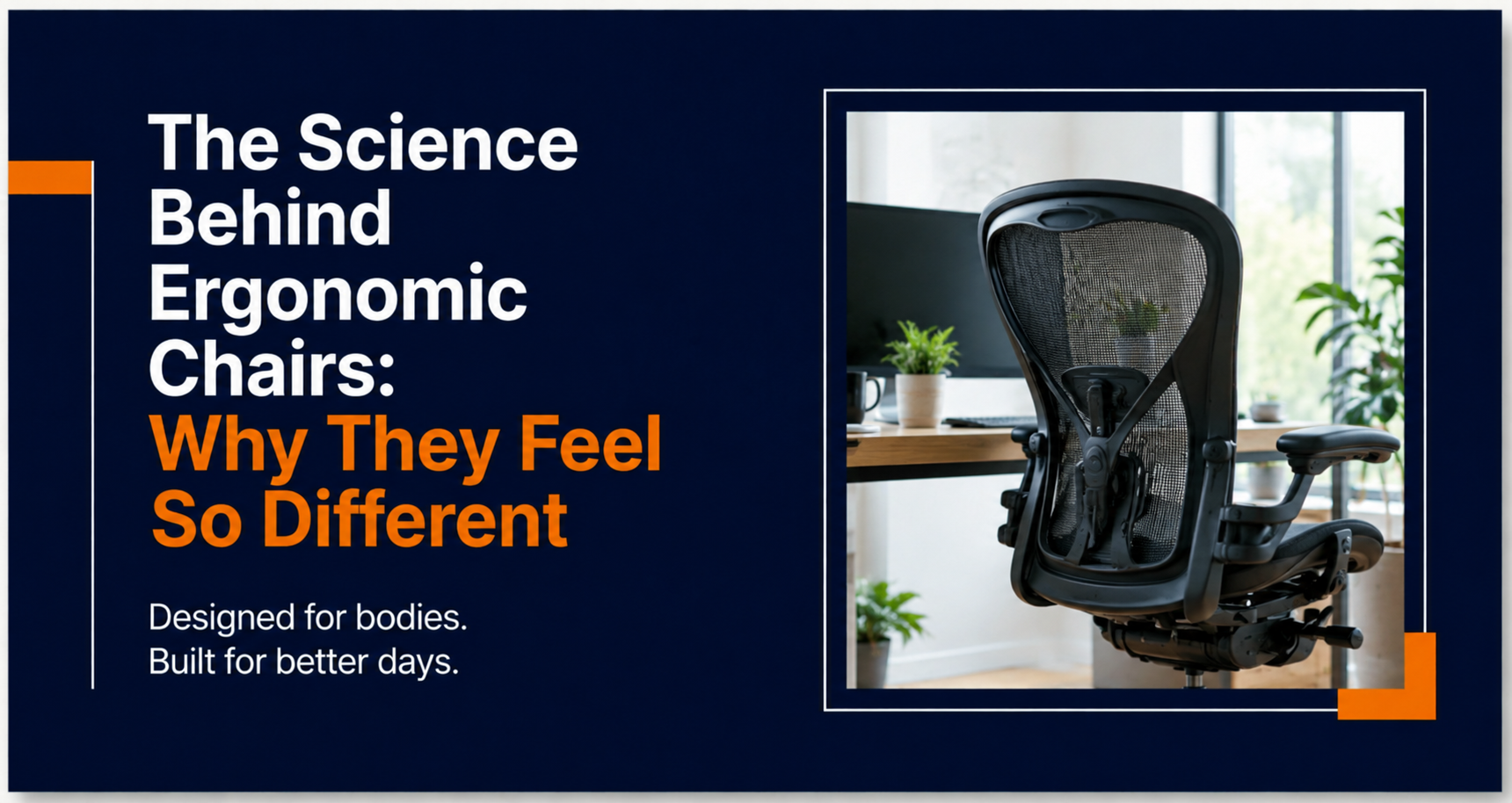
The Science Behind Ergonomic Chairs: Why They Feel So Different

The Science Behind Ergonomic Chairs: Why They Feel So Different  If you’ve ever sat in a premium ergonomic chair for the first time, you’ve probably had one of two reactions. Either you immediately thought, “Okay, I get the hype,” or you wondered why a chair could possibly cost more than the couch in your living room. Then something interesting happens. A few hours go by, and you realize you haven’t been constantly shifting your weight, stretching your back, or standing up every twenty minutes just to give your spine a break. That’s when you start to understand what separates an ergonomic chair from the average office chair you picked up during a holiday sale. The difference isn’t just better materials or a recognizable brand name. It’s science. Ergonomic chairs are designed around the way the human body naturally sits, moves, and works. Every adjustment, curve, and support mechanism serves a purpose, helping reduce physical strain while encouraging healthier posture throughout the workday. Brands like Herman Miller and Steelcase have spent decades researching human movement, biomechanics, and workplace comfort. Their chairs aren’t built simply to look good in a modern office—they’re engineered to support people who spend eight or more hours at a desk every day. Understanding the science behind these chairs makes it much easier to see why so many professionals consider them a worthwhile investment. Your Body Was Never Meant to Stay Frozen One of the biggest misconceptions about office work is that sitting itself is harmful. The truth is a little more complicated. Sitting isn’t the enemy. Remaining in the exact same position for hours at a time is. Your body is constantly making small adjustments, even when you’re focused on work. You lean forward while answering an email, recline during a video meeting, rotate slightly to grab your coffee, or shift your weight without even realizing it. These tiny movements help distribute pressure across different muscles and joints, preventing any one area from becoming overloaded. The problem with many inexpensive office chairs is that they don’t accommodate these natural movements. They either lack proper support or force you into awkward positions that your muscles have to compensate for. Over time, those muscles become fatigued, leading to stiffness in your neck, soreness in your shoulders, and that familiar lower back ache that seems to appear right around the end of the workday. A well-designed ergonomic chair works with your body’s natural movement instead of restricting it. Rather than forcing you to sit in one rigid posture, it provides support as you move throughout the day. Why Proper Lumbar Support Matters More Than You Think If there’s one feature people associate with ergonomic chairs, it’s lumbar support and for good reason. Your lower spine naturally curves inward. This curve helps distribute your body weight evenly while reducing pressure on the discs between your vertebrae. Unfortunately, many standard office chairs don’t adequately support this area. As you sit, your pelvis gradually tilts backward, flattening your lower spine and increasing strain on your muscles and ligaments. That’s why so many people finish the workday rubbing their lower back. Ergonomic chairs are specifically designed to maintain this natural spinal curve. Adjustable lumbar support gently fills the gap between your lower back and the chair, reducing muscle fatigue while encouraging healthier posture without forcing your body into an uncomfortable position. The goal isn’t to make you sit perfectly straight all day—that’s actually unrealistic. Instead, it’s to provide enough support that your muscles aren’t working overtime simply to keep you upright. Every Adjustment Exists for a Reason Have you ever looked at a premium office chair and wondered why it has so many levers and knobs? They’re not there to make the chair look complicated. They’re there because no two people have the same body. Someone who is 6’3″ with long legs needs a very different seating position than someone who is 5’4″. A chair that can’t adapt to different body types is never going to provide consistent ergonomic support. Features like adjustable seat height, seat depth, armrests, recline tension, and lumbar positioning allow users to customize the chair to fit their body rather than forcing their body to fit the chair. This level of adjustability is one of the biggest reasons professionals gravitate toward brands like Herman Miller and Steelcase. These companies understand that comfort isn’t universal. It has to be personalized. Once a chair fits your body correctly, you’ll likely notice something unexpected—you stop thinking about the chair altogether. That’s actually one of the best signs that it’s doing its job. Movement Is Just as Important as Support Many people assume that good posture means sitting perfectly upright without moving. In reality, that’s one of the fastest ways to become uncomfortable. The healthiest posture is one that changes throughout the day. Premium ergonomic chairs are designed to encourage movement by allowing the backrest and seat to move naturally with your body. As you recline, the chair continues supporting your spine instead of leaving your lower back unsupported. When you lean forward to focus on detailed work, the chair adjusts without throwing your posture out of alignment. This dynamic support reduces pressure on your joints while helping improve circulation. Think of it this way: your body isn’t static, so your chair shouldn’t be either. Materials Matter More Than Most People Realize The materials used in an ergonomic chair affect much more than appearance. Take breathable mesh, for example. Many Herman Miller chairs use suspension mesh instead of thick foam cushions. While foam can feel soft initially, it often traps heat and gradually compresses over time. Mesh distributes weight more evenly while allowing air to circulate around your body, helping you stay cooler during long work sessions. Steelcase chairs often take a different approach by combining advanced cushioning with flexible seat and back designs that conform to your movements. Both strategies aim to solve the same problem: reducing pressure points while maintaining consistent support throughout the day. High-quality materials also contribute to durability.

Blog

Is Your Office Chair Secretly Sabotaging Your Career (and Your Back)? Let’s Fix That.

Is Your Office Chair Secretly Sabotaging Your Career (and Your Back)? Let’s Fix That. Hey there, friend! Grab a cup of coffee, pull up a seat, and let’s have a little heart-to-heart. If you’re like most hardworking Americans, you spend a massive chunk of your week parked in an office chair. You’re crushing emails, hopping on Zoom calls, and tackling spreadsheets. But by the time 5:00 PM rolls around, you’re moving like the Tin Man before he got his oil can. Your lower back is throbbing, your neck feels like it’s locked in a vice, and your joints sound like a bowl of Rice Krispies.   Sound familiar? Don’t worry, you aren’t alone, and it’s definitely not your fault. It’s your chair! The Hidden Cost of a “Cheap” Chair We’ve all been tempted by those flashy, brightly colored office chairs at the big-box stores. They look cute, they’re cheap, and they seem like a steal. But here’s the harsh truth: a flimsy desk chair is basically a slow-motion trap for your spine. When you sit in a chair that lacks proper support, your body has to work overtime just to keep you upright. That’s why you feel completely drained by the end of the day. You might think you’re saving money, but when you factor in the chiropractor visits, the heating pads, and the sheer misery of a stiff back, that “bargain” chair is actually costing you a fortune in both health and lost productivity. Enter the Heavyweight Champion (Without the Heavyweight Price Tag) When it comes to saving your spine, there’s one name that stands above the rest: the legendary herman miller aeron ergonomic office chair. It’s the gold standard. It’s the chair that CEOs, tech geniuses, and anyone who values their vertebrae swear by. But let’s be real for a second—looking up the herman miller aeron price 2026 can make your eyes water. Buying one brand new feels like you need to take out a small business loan. But here’s the good news: you don’t have to empty your savings account to get world-class comfort. That’s where a herman miller refurbished chair comes in to save the day. It’s the ultimate hack for getting premium, top-tier seating without the premium price tag. The Aeron Remastered Magic If you want the absolute best of the best, you need to check out the herman miller aeron remastered. It’s a masterpiece of engineering, designed to keep you cool, supported, and pain-free. The best part? You can snag an Aeron Remastered refurbished model and get all those cutting-edge features for a fraction of the retail cost. Whether you’re looking for a standard Herman Miller Aeron refurbished model or you want to show off with a sleek herman miller aeron titanium chair, we have exactly what you need. When you invest in a refurbished aeron chair from us, you aren’t just buying furniture; you’re investing in your daily happiness. The Embody Experience Not feeling the mesh vibe of the Aeron? No problem! If you want a chair that feels like a warm, supportive hug, a herman miller embody refurbished is the way to go. The Embody is specifically engineered to mimic the natural curve of your spine. Grabbing a refurbished herman miller embody chair is an absolute game-changer for anyone dealing with chronic lower back pain. It’s like having a personal physical therapist built right into your seat. Demystifying “Second Hand” and “Refurbished” Now, I know what some of you might be thinking. “Wait, a herman miller second hand chair? Doesn’t that mean it’s going to be wobbly and smell like old coffee?” I totally get the hesitation! But let me set the record straight. When you buy a refurbished herman miller from Erg Solutions Online, it’s a totally different ballgame. We don’t just wipe it down with a wet wipe and call it a day. Our refurbishment process is incredibly rigorous. We inspect every single component, deep clean the materials, and replace any worn-out parts. When you browse our used herman miller aeron chairs, you’re getting a second hand herman miller aeron chair that looks, feels, and functions just like it rolled off the assembly line yesterday. And if you’re a fan of timeless, traditional design, we even carry the herman miller classic chair for that heavy-duty, old-school durability we all love. Local Love: Finding Your Perfect Fit Sometimes, you just want to know what’s available in your own backyard. If you happen to be searching for a Herman Miller Aeron for sale in Fremont, or anywhere else across the country, our online inventory makes it a breeze. You don’t have to drive all over town hunting for a good deal. We bring the showroom right to your screen and ship your perfect chair straight to your door. 4 Pro-Tips for a Healthier Workday Even with the most amazing ergonomic chair in the world, your body still needs a little TLC. Here are a few friendly pointers to keep you feeling great all week long:  Plant your feet firmly: Keep both feet flat on the floor. If your legs dangle, grab a footrest. Dangling legs put unnecessary pressure on your lower back. Eye level is the golden rule: The top third of your monitor should be right at eye level. If you’re constantly looking down, your neck will let you know about it later. The 20-20-20 rule: Every 20 minutes, look at something 20 feet away for 20 seconds. It’s a simple trick that saves your eyes from major screen fatigue. Move your body: Get up and do a little shoulder roll or a quick stretch every hour. Your spine loves movement almost as much as it loves a good chair. Time to Treat Your Back Right At the end of the day, you spend a massive chunk of your life sitting down. You might as well be comfortable while you do it! Don’t let a bad chair dictate your mood, your health, or your weekend plans. Head on over to ERG Solutions Online and take a look

Blog

$1,200 for a Chair?! Are We Being Scammed, or Is Your Spine Just That Expensive to Save?

$1,200 for a Chair?! Are We Being Scammed, or Is Your Spine Just That Expensive to Save? Picture this: You’re sitting at your desk, your lower back screaming like you just went twelve rounds with a heavyweight boxer, and you decide it’s time to upgrade. You hop online, type “ergonomic office chair” into the search bar, and brace yourself to spend maybe $200. But then you see it. A chair. A single, rolling chair. Priced at $1,400. You blink. You refresh the page. You check to make sure you didn’t accidentally click on a used Honda Civic. Fourteen hundred dollars?! Are these ergonomic companies out of their minds, or are they just preying on our desperate, slouching backs?   Take a breath. Put down the pitchforks. Before you write off the high-end ergonomic chair market as a giant, luxurious scam, let’s pop the hood and see what actually makes these things cost more than your first smartphone. Spoiler alert: It’s not just a fancy brand name slapped on some foam. 1. The Materials: It’s Not Just Foam and Dreams Let’s talk about what’s actually going into these things. That $150 chair from the big-box store? It’s made of particleboard, thin plywood, and foam that has the structural integrity of a stale marshmallow. It’s held together by screws that strip if you look at them wrong. Now, look at a $1,000+ ergonomic chair. We’re talking aerospace-grade aluminum bases that won’t crack under pressure. We’re talking about high-density cold-cured molded foam that won’t flatten out after three months. And the mesh? It’s not just some cheap fishing net. Premium chairs use patented, high-tech elastomer meshes (like the famous Pellicle material) that distribute your weight evenly, keep you cool, and cost more per yard than the shirt you’re wearing right now. You’re not just buying a seat; you’re buying a suspension system.  2. The R&D: Nerds in Lab Coats (And That’s a Good Thing) When a regular chair company designs a seat, they probably ask, “How can we make this look cool and ship it in a flat box?” When a premium ergonomic company designs a chair, they hire orthopedic surgeons, biomechanists, and PhD engineers. These companies spend millions on Research and Development. They use pressure-mapping sensors to see exactly how your butt distributes weight. They study how your spine moves when you reach for your mouse. They build hundreds of prototypes and test them with robots that simulate 250-pound people sitting down 100,000 times. You aren’t paying for a chair; you’re paying for a tiny slice of that multi-million-dollar science lab. 3. The Adjustability: More Knobs Than a NASA Spacecraft A cheap chair has one feature: it goes up and down. Maybe it tilts if you lean back hard enough to threaten the rear legs. A premium ergonomic chair is basically a cockpit for your body. It features a “synchro-tilt” mechanism that keeps your feet flat on the floor while the backrest reclines at a scientifically calculated ratio. It has 4D armrests that adjust up, down, forward, backward, and pivot inward so your elbows are perfectly supported whether you’re typing or playing video games. It has seat depth sliders, adjustable lumbar height, and lumbar depth adjustments. All of those complex, weight-activated mechanical joints and premium plastics (like glass-filled nylon, which is ridiculously strong) cost serious money to engineer and manufacture. 4. The “Buy It For Life” Warranty Here’s the ultimate reality check: A cheap chair will start squeaking, leaning, and shedding foam by year two. By year four, it’s in the dumpster. A $1,000+ ergonomic chair usually comes with a 12-year, 24/7 warranty. The manufacturers guarantee every single moving part, the hydraulics, and the foam for over a decade. They literally bet their money that the chair won’t break. When you do the math, a $1,200 chair that lasts 15 years costs you $80 a year. That’s cheaper than your daily coffee habit. 5. The “Other” Thing: Your Medical Bills Here is the most sarcastic but honest truth of all: The chair isn’t actually that expensive; your body is just incredibly expensive to fix. Think about how much you’ve spent on chiropractor visits, massage guns, heating pads, muscle rubs, and ibuprofen because your $150 chair turned your spine into a question mark. If you sit for 8 hours a day, you spend a third of your life in this chair. You spend more time in it than you do hugging your spouse (don’t tell them I said that). Shelling out a grand for a chair that prevents you from needing a $5,000 back surgery isn’t an expense; it’s the best health insurance policy you’ll ever buy. The Bottom Line Are there overpriced chairs out there? Sure. But the top-tier ergonomic chairs from brands like Herman Miller, Steelcase, and Humanscale earn their price tags through sheer engineering, premium materials, and life-changing comfort. At Ergonomic Solutions Online , we know that dropping four figures on a chair is a big deal. That’s why we don’t just throw a catalog at you and wish you luck. We help you navigate the specs, understand the materials, and find the exact chair that fits your body and your budget. We do the heavy lifting so your back doesn’t have to. So, is a $1,000 chair expensive? Yeah. But have you tried paying for a new disc in your lower back? Exactly. Head over to Ergonomic Solutions Online, and let’s find you a throne that your spine will actually thank you for.

Blog

The Silent Productivity Killer Sitting Right Under You

The Silent Productivity Killer Sitting Right Under You You invest in better tech, faster internet, and productivity apps but the one thing supporting you for eight hours a day could be the biggest reason you’re struggling to stay focused. Comfort and Productivity Go Hand in Handz Picture this. It’s 2:30 in the afternoon. You’ve already had two cups of coffee, your to do list is still staring you in the face, and somehow you can’t focus on even the simplest task. You assume it’s because you’ve had a long day, didn’t sleep well, or maybe you’re just hitting the infamous afternoon slump. But what if the problem isn’t your workload at all? What if the biggest obstacle to your productivity is sitting right underneath you? Your office chair is one of the few pieces of furniture you use for hours every single day, yet it’s often the last thing people think about when trying to improve their workspace. While people happily spend hundreds on dual monitors, mechanical keyboards, or standing desks, they continue sitting in a chair that provides little support and quietly drains their energy. The Constant Cycle of Distraction Have you ever noticed how often you move around while working? Without even realizing it, you probably: Shift your weight every few minutes Lean forward toward your monitor Stretch your back repeatedly Cross and uncross your legs Stand up just to get temporary relief Roll your shoulders several times an hour None of these movements are random. They’re your body’s way of telling you something isn’t right. Each adjustment only lasts a few seconds, but every interruption breaks your concentration. It may not seem significant, yet over the course of a workday, those distractions add up. Productivity isn’t always lost through major interruptions. Sometimes it’s lost five seconds at a time. What if it isn’t your focus its you chair what is interrupting you to go into full flow state. Try to change your normal office chair to an ergonomic chair which will drastically improve your comfort sitting for long hours and restore your focus. Your Chair Could Be Causing Mental Fatigue Most people associate physical discomfort with sore muscles. Few realize how closely physical comfort is connected to mental performance. When your body is uncomfortable, your brain constantly processes those discomfort signals in the background. You may not consciously think about your sore shoulders or aching lower back every minute, but your brain certainly notices them. That ongoing distraction can lead to: Reduced focus during important tasks Difficulty staying engaged in meetings Slower decision-making Increased frustration Feeling mentally drained before the workday is over It’s no coincidence that many office workers feel completely exhausted despite spending most of the day sitting down. Why Cheap Office Chairs Become Expensive Over Time Budget office chairs often look like a great deal. They’re affordable, easy to assemble, and seem comfortable enough when they’re brand new. The problem starts after several months of daily use. Common issues include: Seat cushions that flatten quickly Wobbly armrests Weak lumbar support Limited adjustability Poor-quality wheels and tilt mechanisms Materials that wear out much sooner than expected Eventually, you’re left with two problems. First, the chair no longer feels comfortable. Second, you’re shopping for another chair much sooner than expected. What looked like a bargain ends up costing more in replacements not to mention the daily discomfort along the way. What to Look For in a Refurbished Seller Not all “refurbished” listings are created equal. To avoid the gamble, prioritize sellers who: Provide transparent condition reports (clearly distinguishing cosmetic wear from functional integrity) Use certified technicians, not just a quick wipe-down and a listing photo Offer warranties that cover mechanisms, cylinders, and adjustments Ship fully tested chairs with clear return policies Specialize in ergonomic brands known for longevity and repairability Quality refurbishment is about accountability. If a seller won’t stand behind the function, they’re just reselling someone else’s problem. What Makes an Ergonomic Chair Different? A true ergonomic chair isn’t designed to force everyone into the same sitting position. Instead, it’s built to adapt to the individual using it. High-quality ergonomic chairs typically include features such as: Adjustable lumbar support that follows the natural curve of your spine Height-adjustable armrests that reduce shoulder tension Seat depth adjustment for proper leg support Recline mechanisms that encourage movement throughout the day Breathable mesh materials that improve airflow Flexible backrests that move with your body instead of restricting it The result isn’t just better posture. It’s less effort. And when your body works less, your mind can focus more. Why So Many Professionals Choose Refurbished Flagship Chairs There’s a reason you’ll find premium ergonomic chairs from Herman Miller and Steelcase in corporate offices, design studios, hospitals, and technology companies across America. They’re built to perform for years—not just until the warranty expires. The only downside? Buying one brand new can easily cost well over a thousand dollars. Fortunately, professionally refurbished flagship chairs offer an alternative that makes far more sense for many buyers. You get the same premium engineering, exceptional durability, and ergonomic support at a significantly lower price, making high-end seating much more accessible for home offices and small businesses alike. Invest in the Furniture You Use the Most Think about how many hours you spend sitting every year. For most office workers, it’s well over 2,000 hours. That’s more time than you’ll spend on your couch, at your dining table, or in your car. Yet your office chair is often the least researched purchase in your workspace. Instead of viewing a quality ergonomic chair as another expense, think of it as an investment in your comfort, focus, and long-term productivity. Final Thoughts If your workday is filled with constant fidgeting, afternoon fatigue, stiff muscles, and difficulty staying focused, your office chair deserves a closer look. The right chair won’t magically eliminate every distraction, but it can remove one of the biggest physical barriers to productive work. Sometimes improving your workflow doesn’t require another productivity app or

stop sitting on your paycheck and your spine
Blog

The Great American Spine Crisis: How to Save Your Back (And Your Bank Account) Without Losing Your Mind

The Great American Spine Crisis: How to Save Your Back (And Your Bank Account) Without Losing Your Mind Let’s be honest for a second. The great American Dream used to be a white picket fence, a couple of kids, a golden retriever named Buster, and a driveway that didn’t flood when it rained. Today? The American Dream is simply being able to stand up from your desk without making a sound that resembles a dying walrus.   We are a nation of sitters. Whether you’re grinding away in a corporate cubicle, screaming at a 14-year-old in Call of Duty as a full-time Twitch streamer, or part of the massive remote-work army that thought working from the kitchen island was a “cute” and “productive” idea, we are all glued to our screens. And while your boss (or your chat room) might be thanking you for that 12-hour hustle, your spine is currently filing for divorce. If you’re reading this, chances are your posture currently resembles a cooked shrimp. We’ve all been there. You buy one of those “ergonomic” office chairs from a certain mega-online retailer for about $49.99. It looks sleek in the photos! But three months in, the lumbar “support” has flattened into a sad little pancake, the armrests wobble like a shopping cart with a bad wheel, and every time you shift your weight, the chair lets out a metallic screech that terrifies the cat.   Or maybe you’re a remote worker who has just been using a wooden dining room chair. Congratulations, your glutes have officially gone numb, and your lower back feels like it’s being stabbed by a thousand tiny, angry needles. And streamers? Don’t get us started. You’re hunching over your gaming rigs in those generic, faux-leather “racing style” chairs that look incredibly cool on camera but feel like sitting on a warm brick.   The result? You’re 32 years old, but you move like an 85-year-old who just ran a marathon on a trampoline. You’re popping ibuprofen like they’re Skittles, and you’re one wrong sneeze away from being stuck in a bent-over position until next Tuesday.   This is where ERG Solutions Online steps in to save your vertebrae. We aren’t talking about strapping a tennis ball to your back or doing weird yoga stretches in the breakroom. We’re talking about actual, scientifically designed, high-end ergonomic seating. Think about the math here. If you don’t fix your seating situation, you’re going to end up paying a chiropractor $100 every week to crack your back into submission. You’re buying heating pads, pain creams, and physical therapy copays. By investing in a refurbished premium chair from ERG Solutions Online, you are literally saving your wallet by preventing the massive medical bills your terrible chair is about to cause. Plus, these chairs are built like absolute tanks. A refurbished Herman Miller will outlive your current laptop, your dog, and possibly your next three jobs.   Look, the American hustle is real. Whether you’re coding until 2 AM, leading back-to-back Zoom calls, or streaming to an audience of 50,000, you deserve to do it without feeling like you’ve been run over by a freight train.   Stop punishing your body with generic, flimsy chairs that belong in a college dorm room, and stop punishing your bank account by overpaying for brand-new retail prices. Head over to ERG Solutions Online, grab a refurbished Steelcase Leap or a Herman Miller Aeron, and treat your back to the VIP lounge it deserves.   Your spine will thank you. Your wallet will thank you. And the next time you stand up from your desk? You won’t sound like a dying walrus. You’ll just stand up. Like a normal, pain-free human being. Now, doesn’t that sound like the real American Dream?

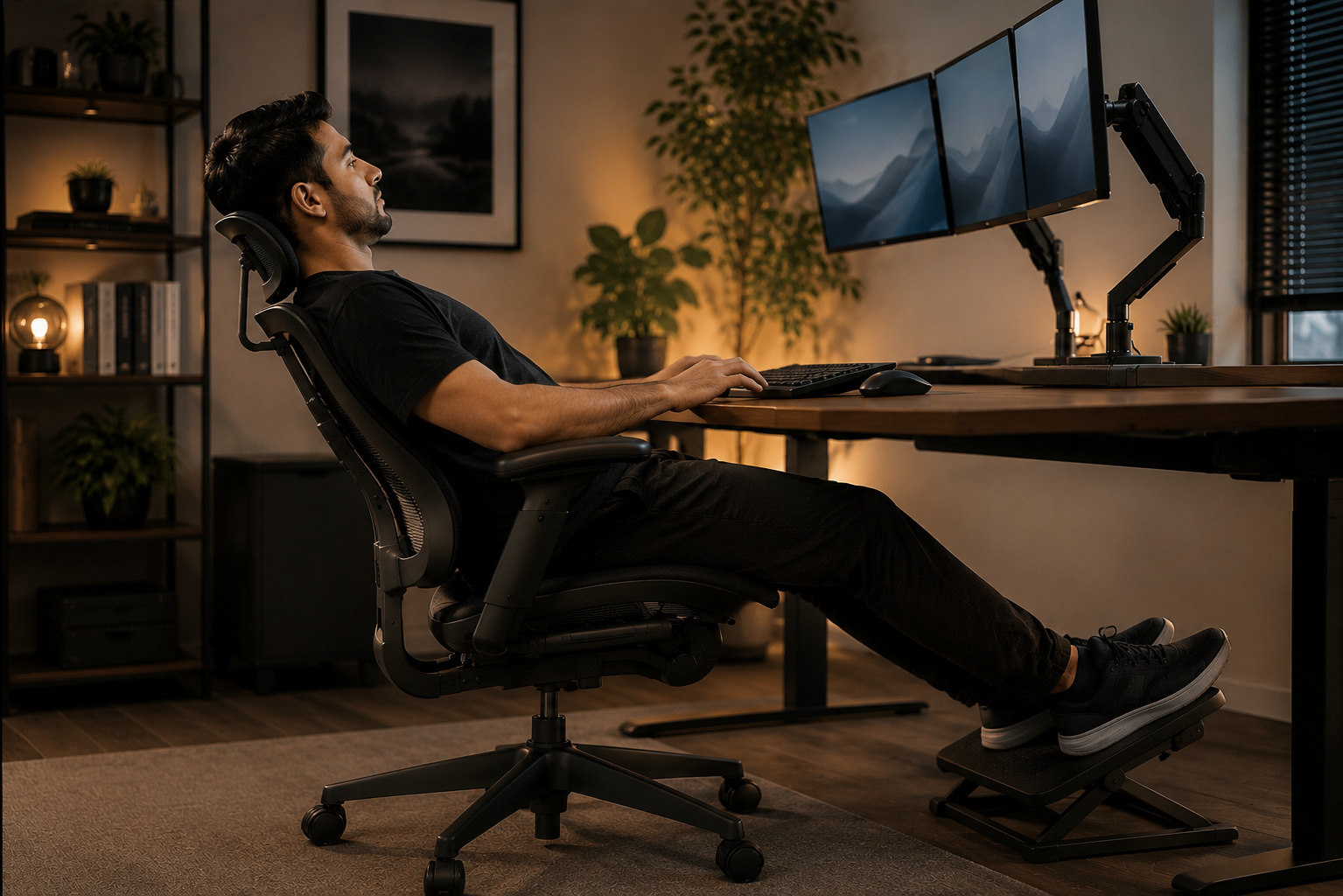
Man sitting on a normal chair vs on an ergonomic chair
Blog

Your Back Is Not a Doormat (And Your Chair Should Stop Treating It Like One)

Your Back Is Not a Doormat (And Your Chair Should Stop Treating It Like One) Let’s be brutally honest for a second. You didn’t wake up this morning thinking, “You know what I’d love today? A dull, persistent ache right where my spine meets my will to live.” And yet… here we are. That “ergonomic” chair you bought during a late-night Amazon scroll? The one with the 4.8 stars and the words “cloud comfort” in the description? Yeah. It’s not cloud comfort. It’s cloud disappointment. And your lower back has filed a formal complaint.  The Great Ergonomic Lie We’ve All Been Sold Here’s the dirty secret of the office furniture world: “Ergonomic” isn’t a certification. It’s a vibe. Any brand can slap that word on a product. Doesn’t mean it was designed by humans who studied human bodies. Doesn’t mean it’ll support you through a 9-to-5 (or a 9-to-midnight, no judgment). Doesn’t mean it won’t leave you doing that subtle desk-wiggle at 2:47 PM just to find one comfortable position. Real ergonomic furniture isn’t about buzzwords. It’s about biomechanics. It’s about engineering that follows the curves of your spine, not the curves of a marketing budget.  Adjust to your lumbar curve (not a generic foam bump that pokes you in the wrong spot) Let you set seat depth so your thighs are supported without cutting off circulation to your legs Position armrests where your arms actually rest (spoiler: not dangling like sad noodles) Move with you when you recline—no wrestling match required When your chair actually works with your body instead of against it, something wild happens: you stop thinking about your chair. You just… work. Focus. Create. Exist. Without the low-grade background noise of discomfort. Why Your “Budget-Friendly” Chair Is Actually Costing You Let’s talk real numbers. Not just the $199 you spent. But the actual cost: What You Paid What You Actually “Bought” $199 for the chair $199 + 2 hours of assembly rage — $40 in ibuprofen over 4 months — 1 chiropractor visit ($85–$150) — Countless minutes lost to fidgeting, stretching, and “why does this hurt?” — That 3 PM crash you blame on lunch… but is actually your spine staging a mutiny Suddenly, “saving money” feels a lot like pre-paying for pain. The Smarter Move: Premium Support, Without the Premium Price Tag Here’s the plot twist you’ve been waiting for: You don’t need to drop $1,200 on a brand-new Herman Miller Aeron to get world-class ergonomic support.At ERG Solutions Online, we specialize in professionally refurbished ergonomic chairs from the brands that actually invented the category—Herman Miller and Steelcase. These aren’t “used chairs with a fresh coat of hope.” They’re high-performance seats that have been: Professionally inspected, cleaned, and repaired by technicians who know these chairs inside-out Fully tested for function: lumbar, tilt, height, armrests, seat depth—all calibrated to spec Backed by a 5-year warranty + 15-day money-back guarantee (because confidence matters) Shipped free across the U.S., ready to upgrade your workspace without the wrestling match Think of it like buying a certified pre-owned luxury car. Same engineering. Same performance. Just without the new-car depreciation—or the guilt. Real Talk: What Changes When You Sit Right? Your focus sharpens because you’re not distracted by discomfort Your energy lasts past 3 PM (no extra coffee required) Your posture fixes itself because the chair does the heavy lifting You save hundreds vs. buying new—without sacrificing quality You keep premium furniture out of landfills (eco-win, by the way)  And yes—you’ll finally stop doing that weird shoulder-roll stretch in Zoom meetings. (Your coworkers will thank you.) Quick Self-Check: Is Your Chair Helping or Hurting? Take 30 seconds. Right now. Sit down. Do you relax… or immediately start adjusting? Rest your arms. Are your shoulders dropped… or creeping toward your ears? Lean back slightly. Does the chair move with you… or fight you?  If you hesitated on any of these, your chair isn’t supporting you. It’s negotiating with you. And you deserve better. Your Move, Chair Survivor You’ve already learned the hard way: not all “ergonomic” claims are created equal. Not all savings are actually savings. And your back isn’t asking for luxury. It’s asking for alignment. Swap the gamble for the guarantee. The mystery for the mastery. The “eh” for the “ahhh.” 👉 Shop Refurbished Ergonomic Chairs & Furniture at ERG Solutions OnlineFree shipping. 5-year warranty. Zero buyer’s remorse. P.S. If you’ve ever used a rolled-up hoodie as “lumbar support,” we see you. And we’ve got something better. (It’s adjustable. And it doesn’t smell like laundry day.) 🪑✨

Blog

Love Your Spine. Love the Planet. Here’s How

Love Your Spine Love The Planet Heres How ! Let’s talk about the modern dilemma. On one hand, you’re trying to be a responsible human. You reuse grocery bags. You sort recycling. You feel mildly guilty every time something unfixable goes in the trash. On the other hand, your lower back is staging a full-blown mutiny by 2 PM, and your current chair feels less like “ergonomic support” and more like “a slightly firm ottoman with commitment issues.” You want to feel better. You want to do better. And you’re tired of being told those two goals require completely different budgets. Good news: they don’t. The Hidden Cost of “New” (Spoiler: It’s Not Just Money) We’ve been conditioned to think “new” equals “better.” But when it comes to office furniture, the math rarely adds up. Manufacturing a brand-new chair requires raw materials steel, aluminum, virgin plastics, polyurethane foam, textiles, packaging, and global shipping fuel. Even premium chairs carry a carbon footprint before they ever reach your desk. And when that $200 “ergonomic” chair from a big box store flattens out in 18 months? It often ends up in a landfill, where synthetic foam and plastic don’t decompose they just linger. Meanwhile, your body pays the daily toll. Poor lumbar support forces your core muscles to overwork just to keep you upright. Shallow breathing from slouching cuts oxygen flow to your brain. Constant micro-adjustments burn mental bandwidth you’d rather spend on actual tasks. You’re not lazy. You’re ergonomically misaligned. And replacing a bad chair with another bad chair just repeats the cycle. Why Refurbished Is the Sweet Spot Here’s where things get interesting. Herman Miller and Steelcase didn’t design their chairs to last three years. They engineered them to last decades. The frames are aircraft-grade aluminum or reinforced steel. The mechanisms are built for thousands of recline cycles. The mesh and foam are calibrated to human biomechanics, not marketing trends. When a high quality chair reaches the end of its first life usually because a company upgraded their office layout or shifted to hybrid work it doesn’t become trash. It becomes an opportunity. Professional refurbishment isn’t a euphemism for “used.” It’s a structured, accountable process: Full inspection: Frames, gas cylinders, tilt mechanisms, and adjustment points are stress-tested Deep cleaning: Mesh, fabric, and hard surfaces are professionally treated and sanitized Targeted repairs: Worn components are replaced with OEM or certified equivalents Function verification: Height, lumbar, armrests, and recline tension are calibrated to spec Ready for daily use: Shipped with setup guidance and backed by a real warranty Think of it like buying a certified pre-owned car or a manufacturer-refurbished laptop. You’re not gambling on a marketplace listing. You’re getting verified performance, just without the new-retail markup or the resource drain. The Dual Win: Feel Better, Do Better Choosing a restored ergonomic chair isn’t a compromise. It’s a convergence. For your body: You get research-backed support. Adjustable lumbar that matches your spine’s natural curve. Seat depth that keeps your feet flat. Armrests that actually rest your arms. Tilt tension that encourages healthy movement instead of fighting it. The result? Less end-of-day soreness, sharper focus, and energy that doesn’t crash at 3 PM. For the planet: You extend the lifecycle of durable engineering. You reduce demand for new resource extraction. You keep high-quality materials out of landfills. You lower the carbon footprint associated with manufacturing and freight. Sustainability isn’t always about buying less—it’s often about buying better, and keeping it in circulation longer. It’s not “either/or.” It’s “both/and.” Quick Reality Check: Is It Time to Upgrade? Take sixty seconds. Sit in your current chair. Ask yourself: Are my feet flat, with knees at roughly 90 degrees? Does my lower back feel gently supported, not pushed or abandoned? Are my shoulders relaxed, or are they creeping toward my ears? Can I recline slightly without feeling like I’m wrestling the chair? After an hour, do I feel stable—or am I already shifting to find comfort? If you hesitated on any of these, your setup might be working against you. And swapping it out doesn’t require a four-figure investment or a complete office overhaul. What to Look For in a Refurbished Seller Not all “refurbished” listings are created equal. To avoid the gamble, prioritize sellers who: Provide transparent condition reports (clearly distinguishing cosmetic wear from functional integrity) Use certified technicians, not just a quick wipe-down and a listing photo Offer warranties that cover mechanisms, cylinders, and adjustments Ship fully tested chairs with clear return policies Specialize in ergonomic brands known for longevity and repairability Quality refurbishment is about accountability. If a seller won’t stand behind the function, they’re just reselling someone else’s problem. Small Choice, Real Impact You don’t need to overhaul your entire lifestyle to make a difference. Sometimes the most sustainable choice is the one that also makes your daily life better. A chair that supports your spine and respects planetary boundaries isn’t a luxury. It’s infrastructure. Your back doesn’t need a miracle. It needs alignment. The planet doesn’t need perfection. It needs participation. And you don’t need to choose between them. This article was drafted with AI assistance and reviewed for accuracy. Environmental and ergonomic insights align with EPA waste-reduction guidelines, OSHA seating recommendations, and manufacturer sustainability reports. 🔗 If you’d like to explore professionally restored Herman Miller or Steelcase seating: ergsolutionsonline.comFree shipping. 5-year warranty. 15-day returns. Better for you. Better for the planet.

🔥 LIMITED TIME OFFER

Use the coupon below during checkout and save instantly on your first purchase.

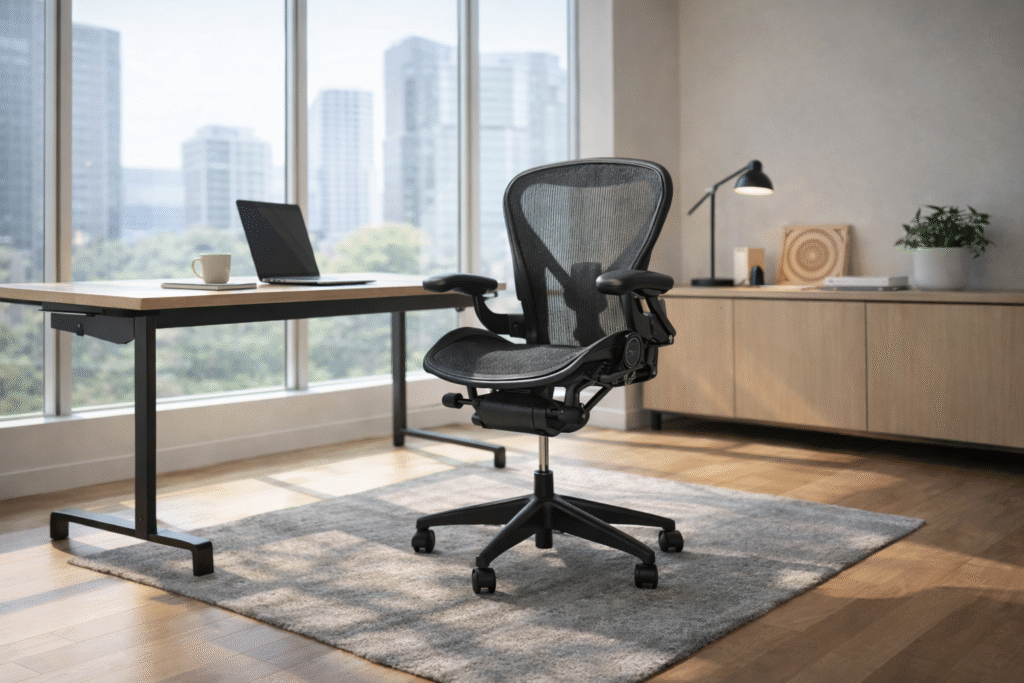
Modern home office with an ergonomic mesh office chair, minimalist desk, and laptop beside large windows overlooking a city skyline