

From a Basic Desk Chair to an Ergonomic Workhorse: How Office Chairs Got So Smart
Take a look at a modern ergonomic office chair and there’s a whole lot more going on than four wheels and somewhere to park yourself until 5 p.m.
You’ve got lumbar support moving against your lower back, armrests going up, down, forward, backward, and sometimes sideways. The seat can slide. The back can recline. Some chairs use mesh that flexes with your body, while others have carefully shaped foam and support systems hidden underneath the upholstery.
It almost seems ridiculous compared with the old-school office chair.
But none of those adjustments showed up because somebody decided office chairs needed more buttons and levers. They developed because designers started paying serious attention to a pretty basic question:
What actually happens to the human body when somebody sits at work for hours?
That question helped turn the humble office chair into the ergonomic chairs we know today.
Office Chairs Weren't Always This Complicated
Go back far enough and workplace seating was pretty straightforward. A chair was a chair. If you could sit on it without landing on the floor, it was doing most of what people expected.
That made more sense when many jobs involved considerably more movement.
Modern office work changed the deal.
As desk jobs expanded and computers became a normal part of American workplaces, employees started spending longer stretches planted in front of a screen. Suddenly, the chair wasn’t something you used for a little while between other tasks. It became equipment people could spend most of their working day using.
And when you spend that much time sitting, little design problems stop feeling little.
A backrest that doesn’t support your lower back becomes pretty noticeable after six hours. A seat that’s too deep starts bothering your legs. Armrests that sit too high can leave your shoulders uncomfortable. A chair that’s the wrong height can mess with the position of everything from your feet to your keyboard.
The industry needed something better than “Well, it’s got a cushion.”
Then Designers Started Studying How People Actually Sit
One of the major names in the history of ergonomic office seating is American designer Bill Stumpf.
Instead of treating office-chair design as primarily a styling exercise, Stumpf became deeply interested in ergonomics and the relationship between furniture and the human body.
That research eventually helped produce the Ergon Chair for Herman Miller, introduced in 1976. Herman Miller describes Ergon as its first ergonomic work chair and credits Stumpf with creating what it calls the first ergonomic work chair.
That was a pretty important change in thinking.
The question wasn’t simply, “Does this chair look good in an office?”
It became, “How does somebody actually sit in this thing?”
That sounds obvious now. Back then, it helped push workplace seating in a new direction.
Ergonomic Chairs Are Designed Around People, Not Just Desks
The word “ergonomic” gets thrown around so much these days that you can probably find it slapped on everything from a $20 keyboard to a pillow somebody saw on late-night TV.
Real ergonomics is more practical than the marketing buzzword.
For an office chair, the basic idea is that the chair should accommodate the person using it and the work they’re doing. Since two workers can have completely different heights, builds, leg lengths, and preferred working positions, adjustability becomes a big deal.
Instead of telling your body, “Buddy, this is the chair we’ve got, figure it out,” a good ergonomic chair gives you ways to make the chair fit you.
That’s why modern ergonomic chairs can look like they have more controls than an old pickup truck.
Each adjustment has a job.
So, How Is an Ergonomic Chair Actually Made?
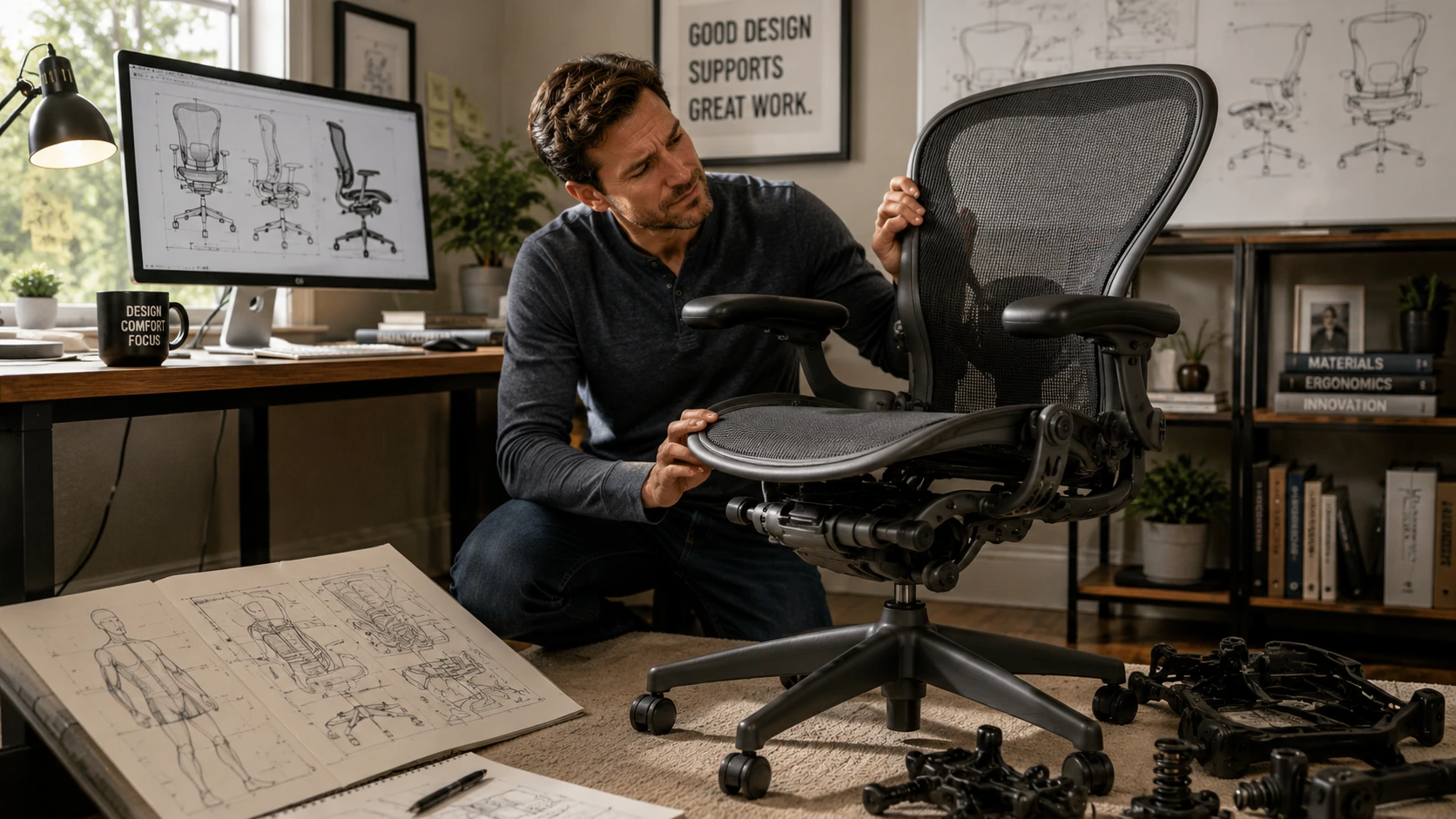
There’s no single recipe every manufacturer follows, but quality ergonomic chairs generally begin with research into body movement, pressure distribution, posture, and how people interact with their workstations.
Designers and engineers then have to turn that research into something people can actually sit on.
It Starts With the Frame
The frame is basically the skeleton of the chair.
Depending on the design, manufacturers may use steel, aluminum, reinforced plastics, or combinations of different materials. The frame needs to handle daily movement, reclining, shifting body weight, and thousands upon thousands of sit-down-and-get-back-up cycles.
A cheap chair can feel fine when you test it for 30 seconds.
Durability starts becoming a bigger deal after year three.
Then Comes the Seat
This is where manufacturers have several options.
Some ergonomic chairs use molded foam cushions designed to distribute pressure while maintaining their shape. Others use suspended mesh that supports the body without relying on thick padding.
Seat shape matters too.
A well-designed seat should support your thighs without putting unnecessary pressure behind your knees. That’s one reason some ergonomic chairs offer adjustable seat depth.
You can slide the seat forward or backward until it better matches your leg length.
It’s a small adjustment that can make a surprisingly big difference.
The Backrest Is Where Things Get Interesting
The human spine isn’t a perfectly straight pole, so designing a completely flat chair back and expecting everybody to love it isn’t exactly a winning strategy.
Ergonomic backrests are typically shaped or engineered to better accommodate the natural curvature of the spine.
Then there’s lumbar support.
The lumbar region is your lower back, and supporting that area is one of the most recognizable features of ergonomic office-chair design. Some chairs have fixed lumbar contours, while more adjustable models allow you to change the height, firmness, or position of the support.
OSHA’s computer-workstation guidance recommends that an office-chair backrest conform to the natural curvature of the spine and provide adequate lumbar support.
Basically, your lower back shouldn’t spend the whole workday out there fighting for itself.
Armrests Aren't Just Somewhere to Park Your Elbows
Armrests look simple until they’re the wrong height.
When they’re too high, they can push your shoulders upward. Too low and they may not provide much useful support at all. Too far apart and you can end up holding your arms away from your body.
That’s why higher-end ergonomic chairs often include adjustable armrests.
Some move vertically. Others move forward and backward, pivot inward, or adjust in width.
The goal is to support your arms while allowing your shoulders to stay relaxed.
You shouldn’t finish an afternoon of spreadsheets feeling like you spent the day doing shoulder shrugs at the gym.
Then There's the Recline Mechanism
Here’s another old office habit we need to retire: believing that “good posture” means sitting perfectly upright at a 90-degree angle for eight straight hours.
People move.
A good chair should let them.
Modern ergonomic chairs often include tilt and recline mechanisms that allow the seat and backrest to respond as the user changes positions.
Some use synchronized tilt systems where different parts of the chair move together. Others allow the user to adjust recline tension depending on their weight and preference.
That movement is part of what separates a serious ergonomic chair from the kind of bargain chair that basically offers two settings:
upright and broken.
Mesh Changed the Office-Chair Game
Another major development came when designers started moving beyond traditional upholstered seats and backs.
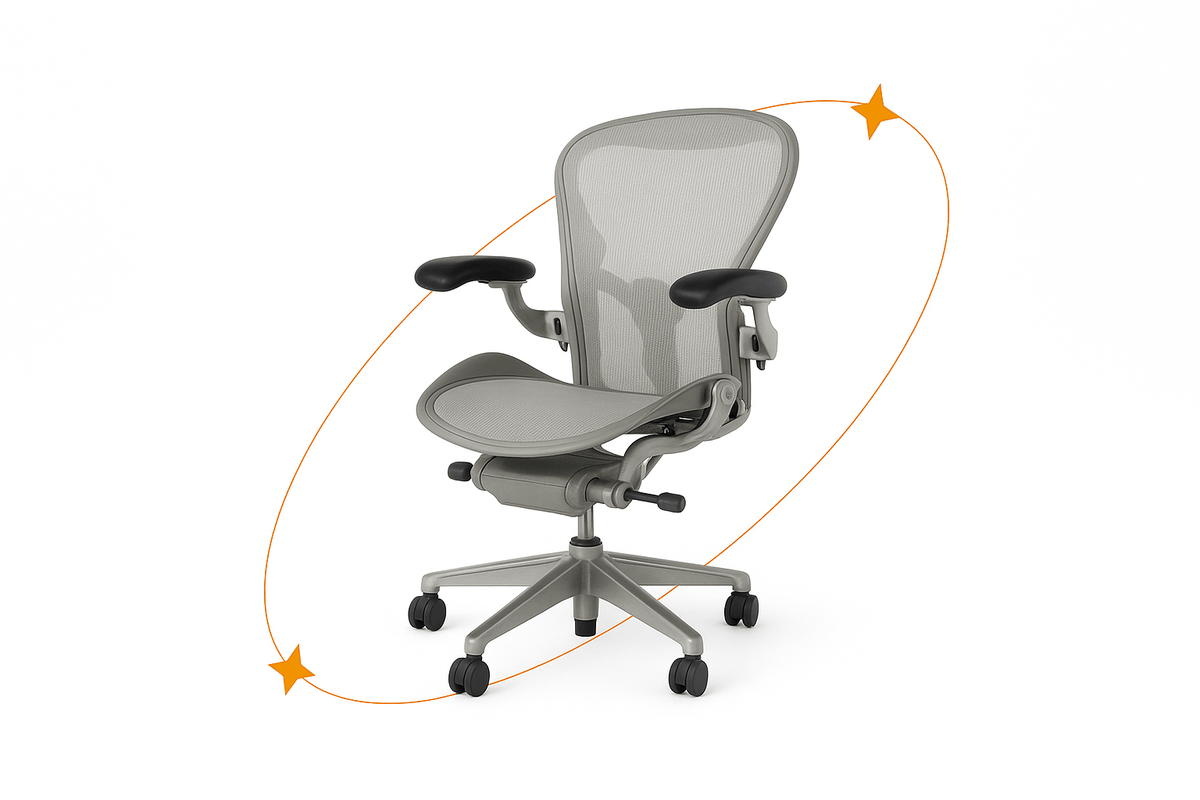
The Herman Miller Aeron, designed by Bill Stumpf and Don Chadwick and introduced in the 1990s, became famous partly because it ditched conventional foam upholstery in favor of a suspended mesh material.
That was a pretty wild-looking office chair at the time.
Today, mesh chairs are everywhere.
Mesh can provide airflow while conforming to the user’s body, which is especially nice when you’ve been working for hours and your office feels warmer than it did that morning.
That doesn’t automatically make mesh better than foam. Quality versions of both can work extremely well. The important part is how the entire chair supports and distributes the user’s weight.
What Do All These Features Actually Do for You?
Here’s where ergonomic chairs earn their keep.
A quality ergonomic chair gives you more control over your sitting position. Instead of adapting yourself to a fixed chair, you can adjust different parts of the chair around your body and workstation.
For somebody sitting at a computer for an hour, that might not sound like a huge deal.
For somebody sitting there 35, 40, or 50 hours every week?
Different ballgame.
Better Support for Your Lower Back
Proper lumbar support can help maintain the natural curve of the lower spine and make it easier to sit comfortably against the backrest.
That matters because once people get tired, they tend to slide, slouch, and lean forward.
A supportive backrest won’t turn you into the poster child for perfect posture, but it can give your body a better starting point.
Less Fighting With Your Chair
Ever sat in a chair where you couldn’t figure out what felt wrong?
Maybe your knees were sitting too high. Maybe the armrests kept pushing your shoulders up. Maybe the seat felt like it was cutting into the backs of your legs.
That’s what adjustability helps solve.
Seat height, seat depth, armrest position, lumbar support, and recline can all be adjusted on many ergonomic chairs so the chair works with your proportions instead of against them.
More Comfortable Long Workdays
Comfort isn’t just about having the thickest cushion you can find.
A giant fluffy chair might feel fantastic for 15 minutes and terrible three hours later.
Long-term sitting comfort comes from support, pressure distribution, movement, and being able to change positions.
That’s why a good ergonomic chair often feels different from a big padded executive chair.
It isn’t trying to imitate your couch.
It’s trying to help you work.
Your Shoulders and Arms Get Some Help Too
A properly adjusted chair can help put your upper body in a more natural working position.
OSHA recommends armrests that allow the shoulders to relax while keeping the elbows relatively close to the body. Your feet should also be able to rest flat on the floor or on a footrest.
Notice the pattern?
Everything is connected.
Move your chair height and suddenly your relationship with the desk changes. Change your armrest height and your shoulders move. Adjust the seat depth and your legs sit differently.
Ergonomics isn’t about one magic feature.
It’s about getting the whole setup working together.
But Don't Let a Fancy Chair Fool You
There’s one thing even a $2,000 ergonomic chair can’t do.
It can’t make sitting all day the same thing as moving.
You still need to get up.
Walk around. Grab some water. Stretch. Stand during a phone call. Change your sitting position. Use your chair’s recline instead of locking yourself into the exact same posture from breakfast until dinner.
A quality ergonomic chair should make sitting better.
It shouldn’t convince you to make sitting your full-time hobby.
Why Premium Ergonomic Chairs Can Cost So Much
People sometimes look at premium office-chair prices and wonder whether somebody accidentally added an extra zero.
Fair question.
But there’s more inside a high-end ergonomic chair than you might expect.
You’re paying for engineering, mechanisms, materials, adjustment systems, manufacturing, testing, and components designed to survive years of daily use.
That doesn’t mean every expensive chair is automatically worth the money.
It does explain why comparing a premium ergonomic chair with a basic $100 office chair isn’t always apples to apples.
The bigger question is whether you actually need to buy that premium chair brand-new.
That's Where Refurbished Ergonomic Chairs Make Sense
Quality ergonomic chairs are often built to last, which creates an interesting secondhand market.
A premium chair doesn’t necessarily stop being a premium chair because somebody else sat in it first.
When properly refurbished, chairs from established manufacturers can offer many of the same fundamental features that made them desirable in the first place: strong frames, adjustable mechanisms, supportive backrests, quality materials, and replaceable components.
That’s the idea behind ERG Office Solutions.
ERG Office Solutions offers refurbished ergonomic office chairs from established names such as Herman Miller, Steelcase, Humanscale, and other premium office-furniture manufacturers.
For somebody building a home office or replacing that chair that’s been squeaking since the Obama administration, refurbished furniture can provide another route into higher-end ergonomic seating without automatically paying brand-new retail prices.
The same goes for businesses outfitting multiple workstations. When you’re buying 10, 20, or 50 chairs, the difference between new and refurbished pricing can get real interesting, real fast.
Your Chair Has Come a Long Way Maybe Yours Should Too
The modern ergonomic chair exists because designers eventually realized something pretty obvious: if people are going to spend a huge chunk of their working lives sitting, the chair should probably be designed around the human body.
What started as basic workplace furniture evolved into equipment shaped by decades of research, experimentation, engineering, and some seriously clever design.
That’s why today’s better ergonomic chairs can adjust to your height, support your lower back, move with you when you recline, accommodate different leg lengths, and help keep your arms and shoulders in more comfortable positions.
None of that means you should sit for ten hours without moving.
But if you’re going to spend a big part of your workday in a chair anyway, you might as well sit in one that actually understands the assignment.
ERG Office Solutions gives home-office workers and businesses access to refurbished premium ergonomic chairs from some of the biggest names in workplace seating. Because after everything engineers have learned about sitting over the past several decades, there’s really no reason your back should still be negotiating with a $79 desk chair every Monday morning.