Let’s be real: most office back pain doesn’t come from some dramatic injury. It comes from sitting in the same chair, at the same desk, in the same position, for way too long… while telling yourself, “It’s fine, I’ll stretch later.” (You don’t.)
If you work an office job in the U.S., chances are your back has opinions about your daily routine. And it’s not shy about sharing them—usually around 2:47 p.m., right when your focus is already hanging by a thread.
The good news? Office back pain is usually fixable. No voodoo. No complicated routines. Just better ergonomics and a few smarter habits.
Why Your Back Is Mad at You
1) Sitting All Day Is Basically a Prank on Your Spine
Your body wasn’t built to sit for 8 hours straight. It was built to move, bend, walk, and change positions. Office life said, “Cool story—now sit still and stare at a screen.”
When you sit for long stretches:
- Your lower back takes constant pressure
- Your hips tighten up
- Your core checks out mentally
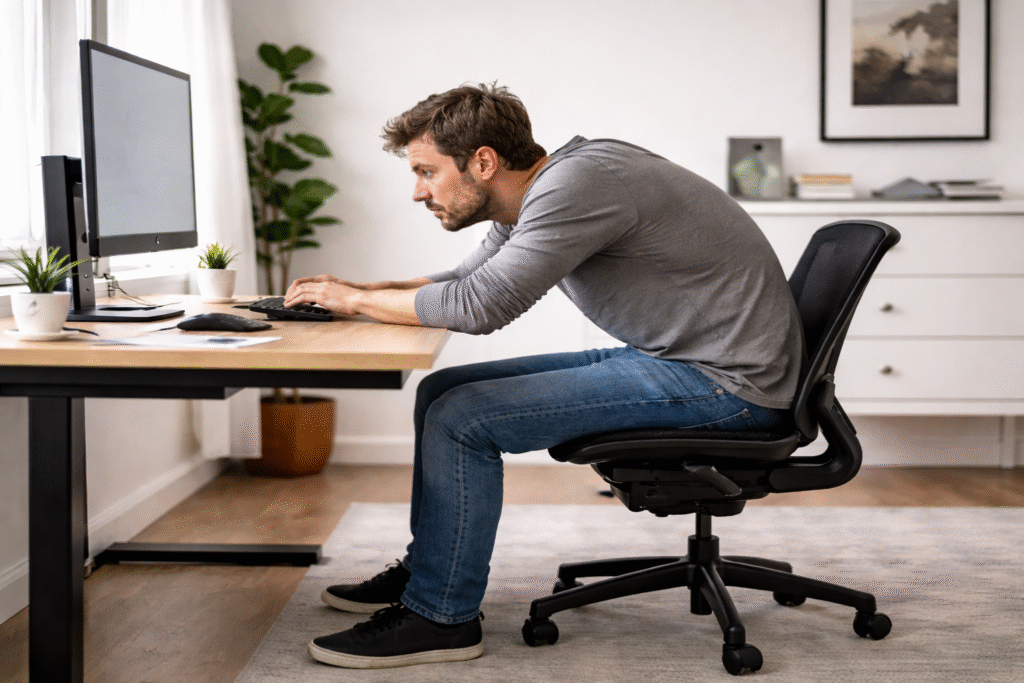
- Your posture slowly turns into a question mark
By the end of the day, your back feels stiff, sore, and ready to clock out early. That’s not aging. That’s your setup being trash.
2) Your Chair Is Probably Lying to You
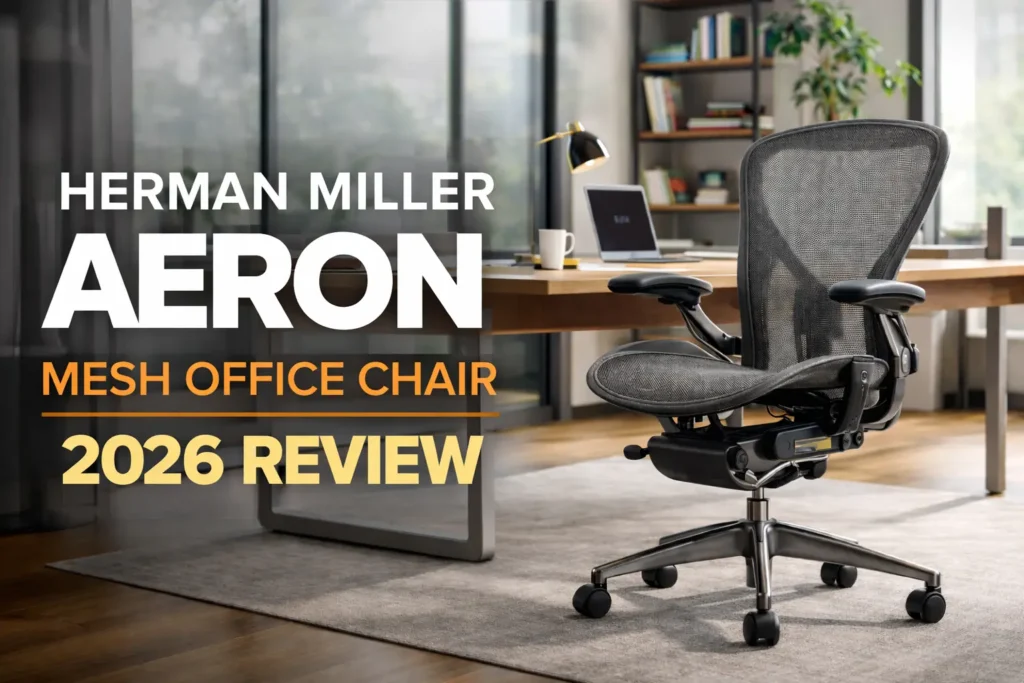
If your chair looks comfy but doesn’t support your lower back, it’s basically a back pain trap with wheels. No lumbar support means your spine collapses into a slouch. Your muscles then work overtime to keep you upright. They get tired. They complain. Loudly.
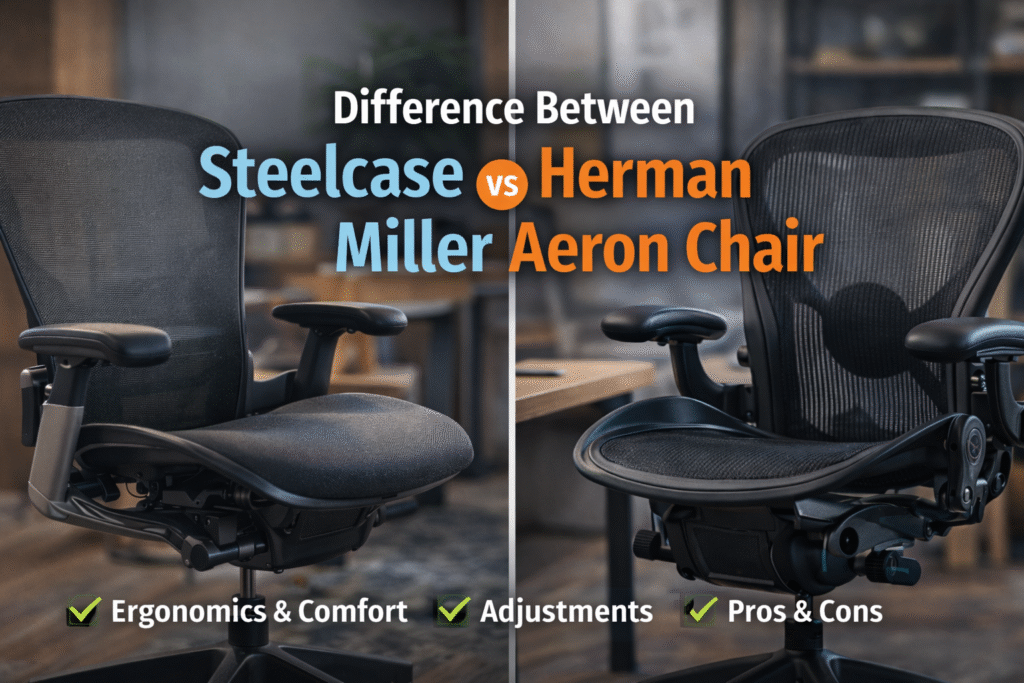
What a real ergonomic chair does:
- Supports the natural curve of your lower back
- Adjusts to your height (because you’re not built like your coworker)
- Lets you lean back a little without wrecking your posture
- Keeps your shoulders relaxed instead of creeping up to your ears
A good chair doesn’t force “perfect posture.” It makes good posture feel natural.
3) Your Desk Setup Is Sneakily Messing You Up
Even the best chair can’t save you if your desk is set up wrong.
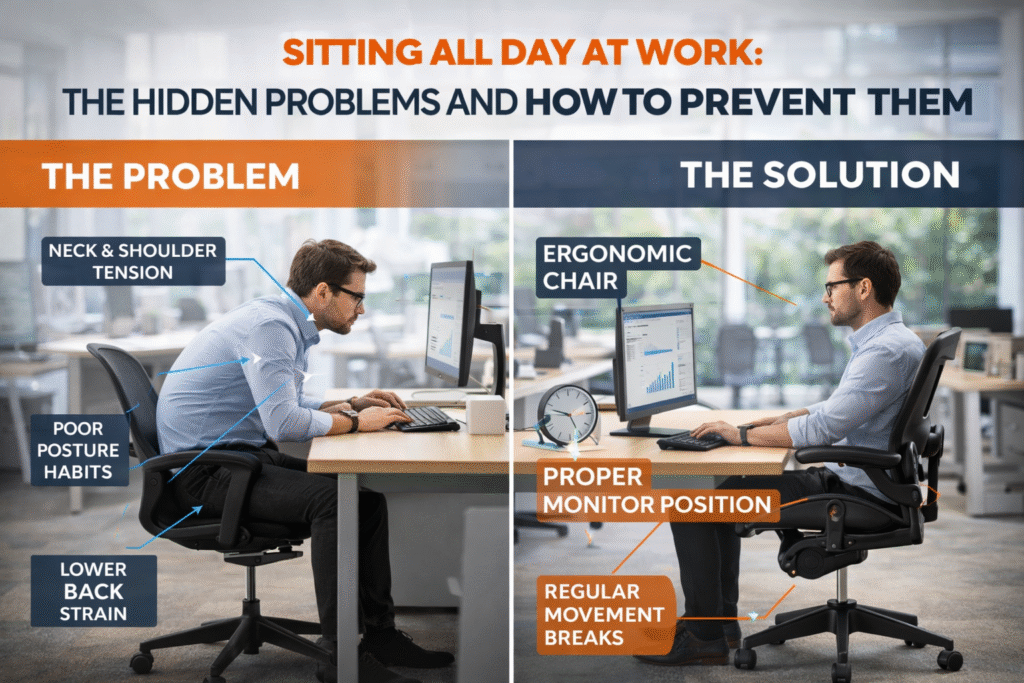
Common office desk crimes:
- Monitor too low → neck sticks forward all day
- Desk too high → shoulders tense up like you’re shrugging at life
- Keyboard too far → you’re reaching like you’re on a game show
- No leg room → you sit twisted like a pretzel
Over time, your back compensates for all of this. And yes, it keeps receipts.
4) You Don’t Move Enough (And Your Body Knows It)
Even with a great setup, staying in one position for hours is rough. Your muscles get tired. Your joints get stiff. Your circulation slows down. Then you stand up and walk like you’re 90 for the first five steps.
Your body wants small, regular movement. Not a full gym session. Just enough to remind it you’re still alive.
How to Fix Office Back Pain Without Turning Your Life Upside Down
1) Get an Ergonomic Chair That Actually Fits You
Look for:
- Adjustable lumbar support
- Adjustable seat height and depth
- Armrests that move
- A backrest that lets you recline a little
If your chair adjusts to you instead of forcing you to adjust to it, you’re already winning.
2) Fix Your Desk Setup (This Takes 5 Minutes)
Set it up like this:
- Feet flat on the floor
- Knees about level with your hips
- Lower back supported
- Elbows around 90 degrees
- Monitor at eye level
- Keyboard and mouse close to your body
Bonus points if you use a sit-stand desk. Standing for part of the day gives your back a break from being crushed by gravity in the same spot all day.
3) Move Like a Normal Human
You don’t need a yoga mat in the office. Just:
- Stand up every 30–45 minutes
- Walk to refill your water
- Roll your shoulders
- Lean back in your chair once in a while
- Switch between sitting and standing if you can
Small movement beats perfect posture every time.
4) Stop Treating Back Pain Like “Part of the Job”
Back pain isn’t some corporate perk you’re supposed to accept. It’s usually your body reacting to bad mechanics, day after day. Fix the mechanics, and the pain usually chills out.
ERG Solutions Online focuses on ergonomic chairs and adjustable desks that are designed for real workdays—not showroom poses. The right furniture won’t magically turn you into a fitness influencer, but it will stop your workspace from slowly wrecking your body.
What You’ll Actually Notice When You Fix Your Setup
- Less lower-back pain at the end of the day
- Fewer neck and shoulder tightness issues
- More energy around mid-afternoon
- Better focus (pain is distracting, who knew)
- Fewer “ugh” sounds when you stand up
Final Word
Your back pain isn’t random. It’s usually the result of sitting badly, at a bad desk, for too long, without moving enough. The fix isn’t complicated—it’s ergonomic furniture, better setup, and a little more movement during the day.