

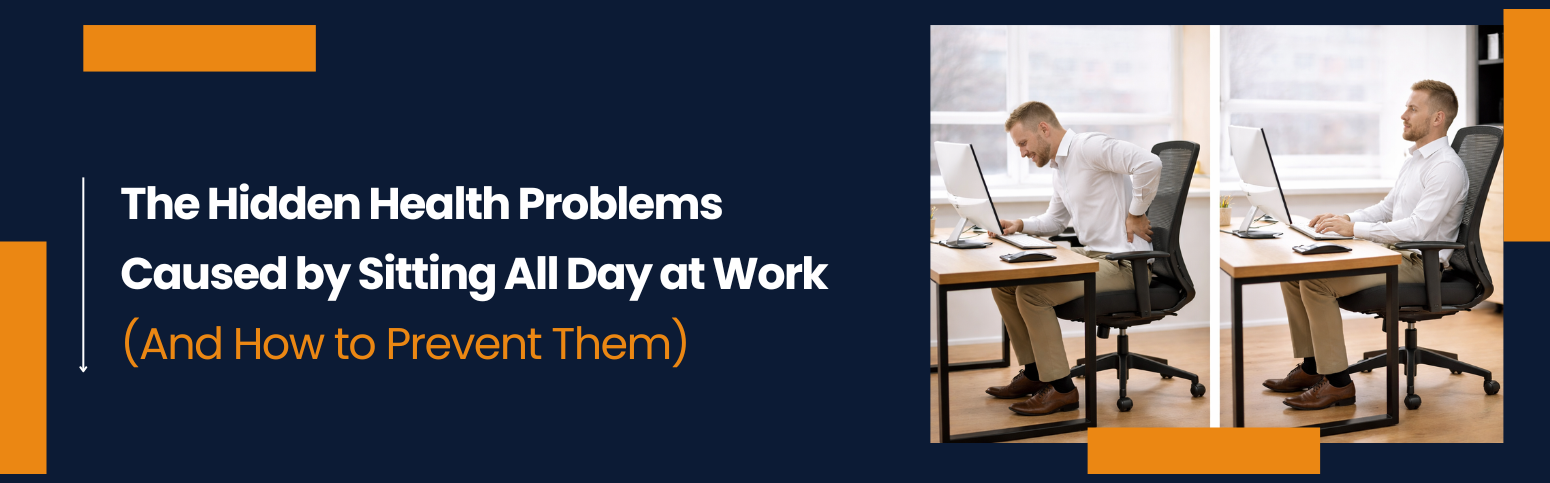
The Hidden Health Problems Caused by Sitting All Day at Work (And How to Prevent Them)
For millions of office workers, a typical workday looks something like this: sit down, open the laptop, answer emails, attend meetings, finish reports, and repeat the process for eight or more hours. It feels normal because it has become the standard routine in modern workplaces. What many people don’t realize, however, is that long hours of sitting can slowly create health problems that develop so gradually they often go unnoticed until discomfort becomes persistent.
The human body simply wasn’t designed to remain in one seated position for most of the day. When employees sit for extended periods, especially in poorly designed office setups, muscles, joints, and circulation are affected in ways that can eventually lead to long-term physical strain.
Understanding these hidden issues is the first step toward preventing them.
Why Prolonged Sitting Is a Problem
When the body stays seated for long periods, several systems begin to slow down. Muscle activity decreases, blood circulation becomes less efficient, and posture often starts to deteriorate. Over time, this combination creates stress on the spine, joints, and muscles.
Office environments also encourage static posture. Many employees remain focused on their screens for hours without realizing how long they have stayed in the same position. Even small posture mistakes repeated every day can compound into larger physical problems.
become the standard routine in modern workplaces. What many people don’t realize, however, is that long hours of sitting can slowly create health problems that develop so gradually they often go unnoticed until discomfort becomes persistent.
The human body simply wasn’t designed to remain in one seated position for most of the day. When employees sit for extended periods, especially in poorly designed office setups, muscles, joints, and circulation are affected in ways that can eventually lead to long-term physical strain.
Understanding these hidden issues is the first step toward preventing them.
Hidden Problems Caused by Long Hours of Sitting
Many workplace-related health issues develop gradually. Because they build up slowly, people often assume the discomfort is temporary or unrelated to their work habits.
Lower Back Strain
Neck and Shoulder Tension
Reduced Circulation
Poor Posture Habits
Why Most People Don’t Notice the Problem
Preventing Office-Related Physical Problems
Maintain Proper Sitting Posture
Preventing Office-Related Physical Problems
Maintain Proper Sitting Posture
Preventing Office-Related Physical Problems
Maintain Proper Sitting Posture
Adjust Monitor and Desk Height
Maintain Proper Sitting Posture
Adjust Monitor and Desk Height
Take Regular Movement Breaks
The Long-Term Benefits of Ergonomic Workspaces
Organizations that invest in ergonomic workplace solutions often see improvements in employee comfort and productivity. When employees experience less physical strain, they are able to focus better and maintain energy throughout the day.
Reducing workplace discomfort also lowers the risk of long-term musculoskeletal problems that can affect both employee health and workplace efficiency.
Final Thoughts
Long hours at a desk are a reality for many professionals. However, the physical problems associated with prolonged sitting are not inevitable. With proper workstation setup, ergonomic seating, and regular movement, employees can significantly reduce the risk of developing back, neck, and posture-related issues.
Small adjustments made today can protect long-term health and make daily work far more comfortable.