

Love Your Spine Love The Planet Heres How !

Let’s talk about the modern dilemma.
On one hand, you’re trying to be a responsible human. You reuse grocery bags. You sort recycling. You feel mildly guilty every time something unfixable goes in the trash. On the other hand, your lower back is staging a full-blown mutiny by 2 PM, and your current chair feels less like “ergonomic support” and more like “a slightly firm ottoman with commitment issues.”
You want to feel better. You want to do better. And you’re tired of being told those two goals require completely different budgets.
Good news: they don’t.
The Hidden Cost of “New” (Spoiler: It’s Not Just Money)
We’ve been conditioned to think “new” equals “better.” But when it comes to office furniture, the math rarely adds up.
Manufacturing a brand-new chair requires raw materials steel, aluminum, virgin plastics, polyurethane foam, textiles, packaging, and global shipping fuel. Even premium chairs carry a carbon footprint before they ever reach your desk. And when that $200 “ergonomic” chair from a big box store flattens out in 18 months? It often ends up in a landfill, where synthetic foam and plastic don’t decompose they just linger.
Meanwhile, your body pays the daily toll. Poor lumbar support forces your core muscles to overwork just to keep you upright. Shallow breathing from slouching cuts oxygen flow to your brain. Constant micro-adjustments burn mental bandwidth you’d rather spend on actual tasks. You’re not lazy. You’re ergonomically misaligned. And replacing a bad chair with another bad chair just repeats the cycle.

Why Refurbished Is the Sweet Spot
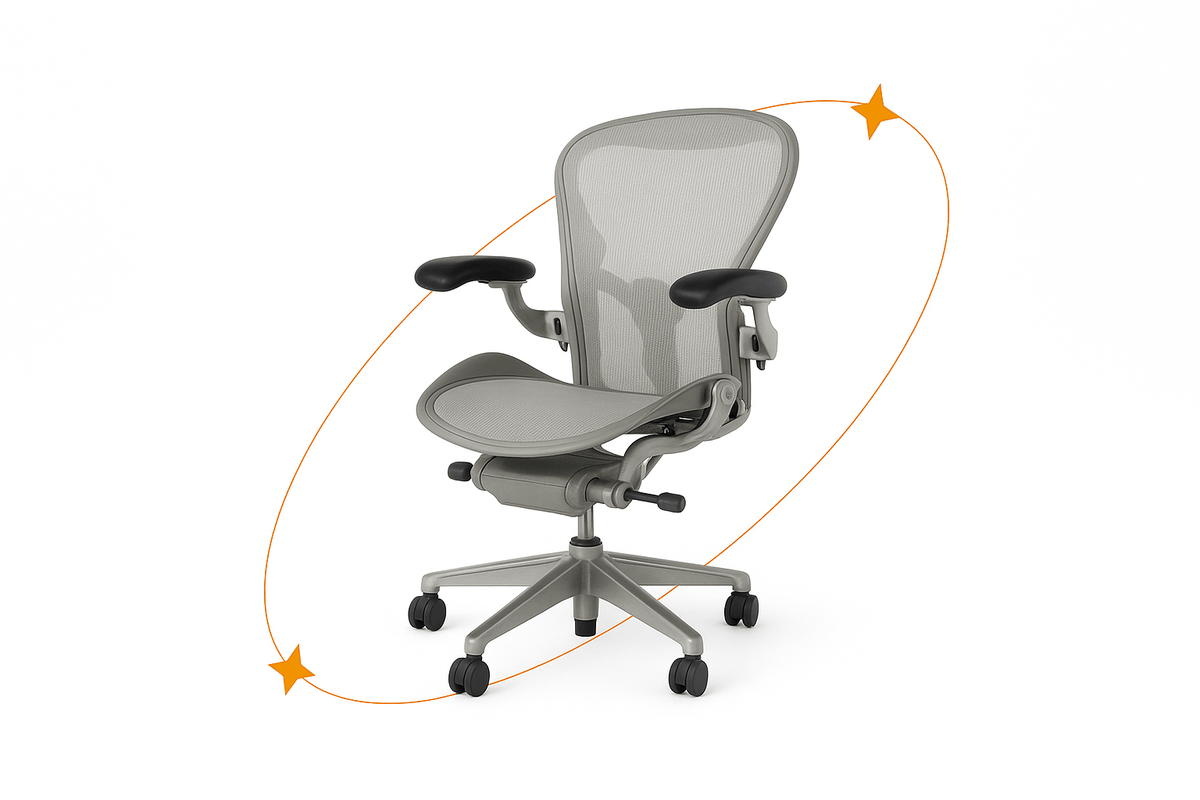
Here’s where things get interesting. Herman Miller and Steelcase didn’t design their chairs to last three years. They engineered them to last decades. The frames are aircraft-grade aluminum or reinforced steel. The mechanisms are built for thousands of recline cycles. The mesh and foam are calibrated to human biomechanics, not marketing trends.
When a high quality chair reaches the end of its first life usually because a company upgraded their office layout or shifted to hybrid work it doesn’t become trash. It becomes an opportunity.
Professional refurbishment isn’t a euphemism for “used.” It’s a structured, accountable process:
- Full inspection: Frames, gas cylinders, tilt mechanisms, and adjustment points are stress-tested
- Deep cleaning: Mesh, fabric, and hard surfaces are professionally treated and sanitized
- Targeted repairs: Worn components are replaced with OEM or certified equivalents
- Function verification: Height, lumbar, armrests, and recline tension are calibrated to spec
- Ready for daily use: Shipped with setup guidance and backed by a real warranty
Think of it like buying a certified pre-owned car or a manufacturer-refurbished laptop. You’re not gambling on a marketplace listing. You’re getting verified performance, just without the new-retail markup or the resource drain.
The Dual Win: Feel Better, Do Better
Choosing a restored ergonomic chair isn’t a compromise. It’s a convergence.
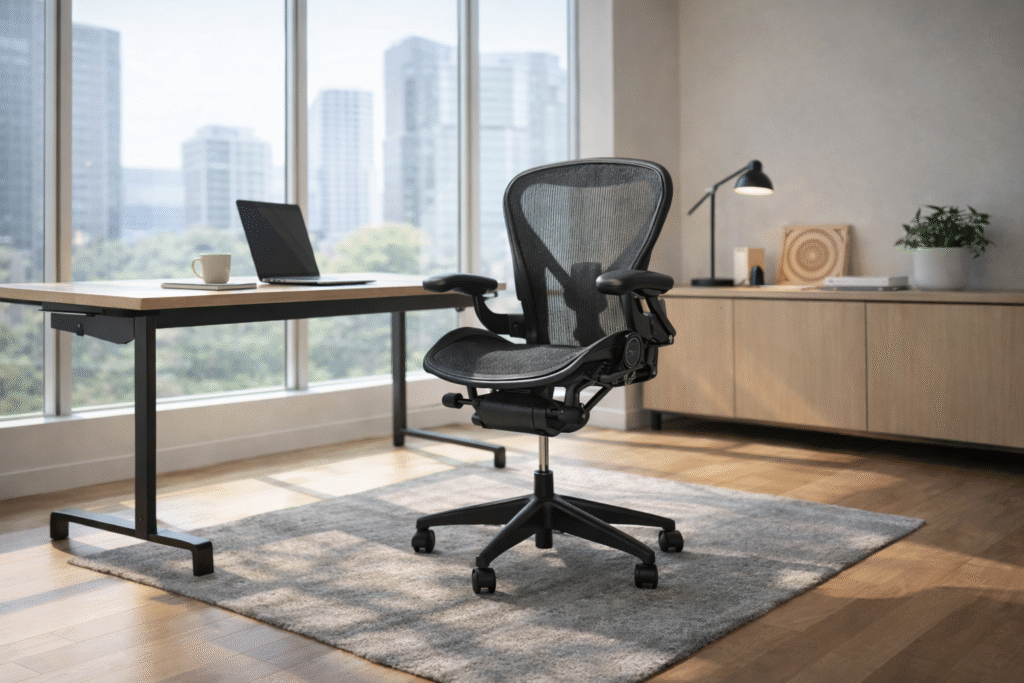
For your body: You get research-backed support. Adjustable lumbar that matches your spine’s natural curve. Seat depth that keeps your feet flat. Armrests that actually rest your arms. Tilt tension that encourages healthy movement instead of fighting it. The result? Less end-of-day soreness, sharper focus, and energy that doesn’t crash at 3 PM.
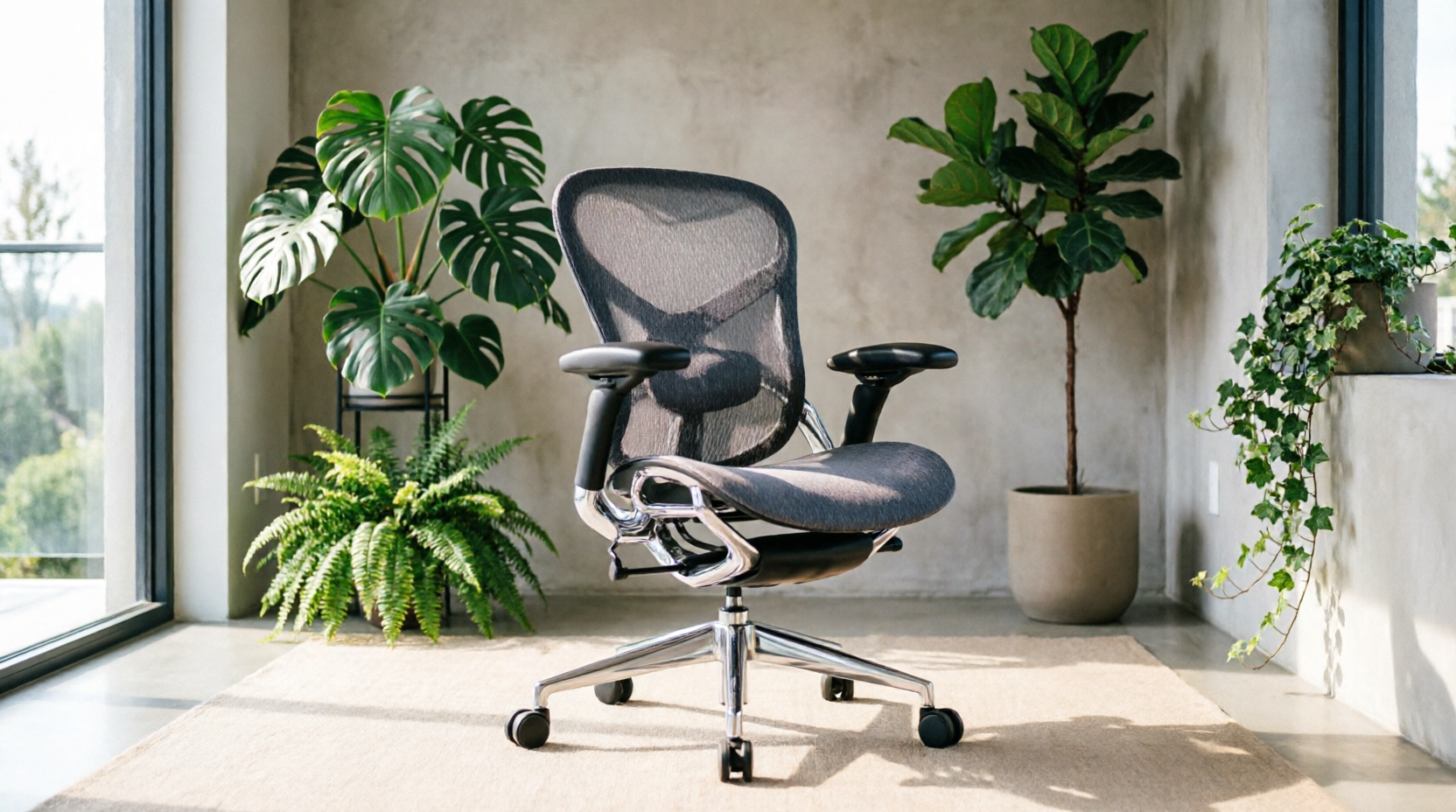
For the planet: You extend the lifecycle of durable engineering. You reduce demand for new resource extraction. You keep high-quality materials out of landfills. You lower the carbon footprint associated with manufacturing and freight. Sustainability isn’t always about buying less—it’s often about buying better, and keeping it in circulation longer.
It’s not “either/or.” It’s “both/and.”
Quick Reality Check: Is It Time to Upgrade?
Take sixty seconds. Sit in your current chair. Ask yourself:
- Are my feet flat, with knees at roughly 90 degrees?
- Does my lower back feel gently supported, not pushed or abandoned?
- Are my shoulders relaxed, or are they creeping toward my ears?
- Can I recline slightly without feeling like I’m wrestling the chair?
- After an hour, do I feel stable—or am I already shifting to find comfort?
If you hesitated on any of these, your setup might be working against you. And swapping it out doesn’t require a four-figure investment or a complete office overhaul.
What to Look For in a Refurbished Seller
Not all “refurbished” listings are created equal. To avoid the gamble, prioritize sellers who:
- Provide transparent condition reports (clearly distinguishing cosmetic wear from functional integrity)
- Use certified technicians, not just a quick wipe-down and a listing photo
- Offer warranties that cover mechanisms, cylinders, and adjustments
- Ship fully tested chairs with clear return policies
- Specialize in ergonomic brands known for longevity and repairability
Quality refurbishment is about accountability. If a seller won’t stand behind the function, they’re just reselling someone else’s problem.
Small Choice, Real Impact
You don’t need to overhaul your entire lifestyle to make a difference. Sometimes the most sustainable choice is the one that also makes your daily life better. A chair that supports your spine and respects planetary boundaries isn’t a luxury. It’s infrastructure.
Your back doesn’t need a miracle. It needs alignment. The planet doesn’t need perfection. It needs participation. And you don’t need to choose between them.
This article was drafted with AI assistance and reviewed for accuracy. Environmental and ergonomic insights align with EPA waste-reduction guidelines, OSHA seating recommendations, and manufacturer sustainability reports.
🔗 If you’d like to explore professionally restored Herman Miller or Steelcase seating: ergsolutionsonline.com
Free shipping. 5-year warranty. 15-day returns. Better for you. Better for the planet.