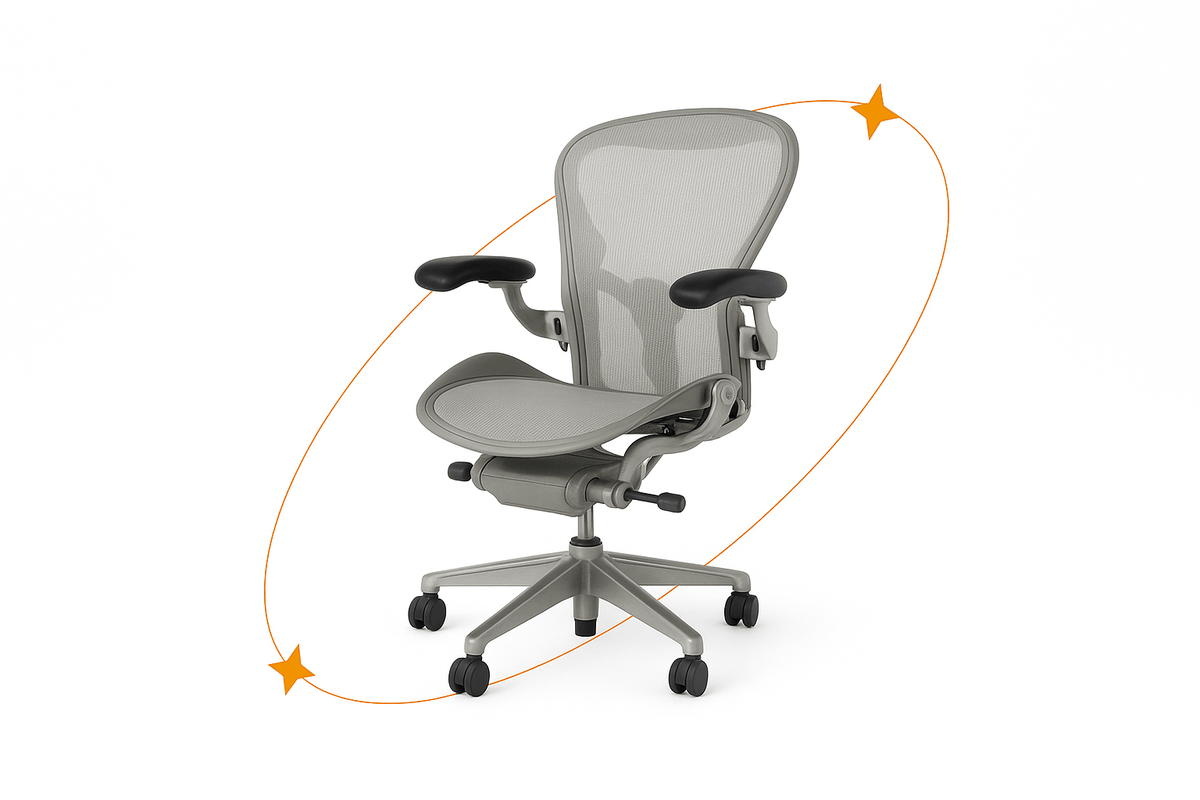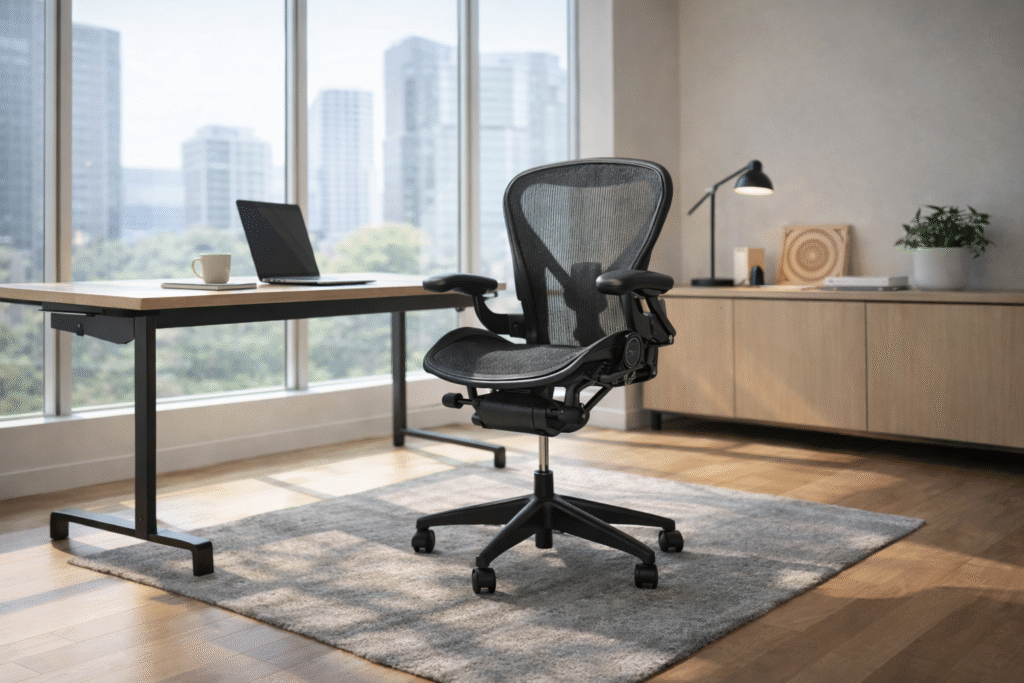


The Hidden Technology Inside a Herman Miller Aeron: Engineering That Changes the Way You Sit
Let’s settle one of the biggest office myths once and for all.
A chair isn’t “ergonomic” just because it has a mesh back and a fancy-looking lever that nobody ever touches.
That’s like calling a bicycle a race bike because it’s painted red.
True ergonomics is rooted in biomechanics, movement science, material engineering, and decades of research into how real people actually sit, shift, lean, reach, and work throughout the day.
That’s exactly where Steelcase has built its reputation.
Rather than forcing users into one “perfect posture,” Steelcase designs its chairs around a much smarter idea:
People aren’t designed to sit still.
And neither should their chairs.
The Human Body Was Built for Movement
Here’s something your office chair probably forgot.
Your body makes hundreds—sometimes thousands—of tiny posture adjustments every day.
Even while answering emails, your spine flexes, your shoulders rotate, your pelvis shifts, and your center of gravity constantly changes.
Researchers call these micro-movements.
Most inexpensive office chairs fight these movements.
Steelcase chairs encourage them.
Instead of locking you into a rigid sitting position, their ergonomic systems allow your body to keep moving naturally while remaining fully supported.
Because surprisingly, the healthiest sitting posture…
…is your next one.
LiveBack Technology: A Backrest That Actual
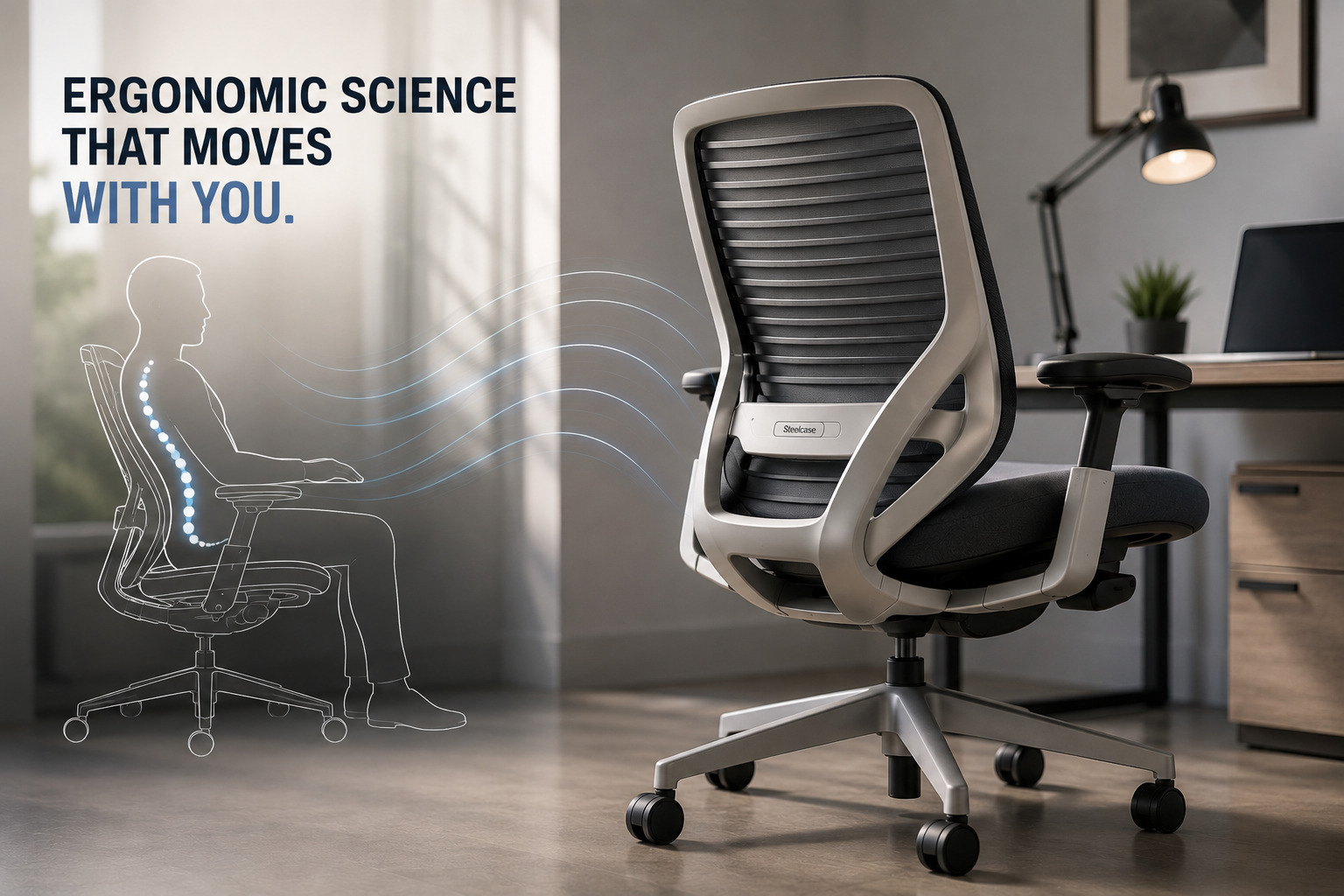
One of Steelcase’s signature innovations is LiveBack® Technology.
Unlike conventional backrests that behave like a flat board with foam glued on top, LiveBack is designed to mimic the movement of the human spine.
Your spine isn’t perfectly straight.
It contains three natural curves:
- Cervical Lordosis
- Thoracic Kyphosis
- Lumbar Lordosis
As you lean, twist, reach, or recline, these curves subtly change.
Steelcase engineered the backrest to flex with those movements.
Instead of pushing your spine into one fixed position, the chair continuously adjusts to maintain support where it’s needed.
Think of it as suspension for your back.
Natural Glide: Reclining Without Leaving Your Desk
Have you ever leaned back in a cheap office chair only to realize you’re now three feet away from your keyboard?
Congratulations.
You’ve discovered poor engineering.
Steelcase solved this problem with Natural Glide®.
Instead of simply tipping backward, the seat glides forward slightly as the back reclines.
Why does this matter?
Because your:
- Feet stay planted.
- Hands remain closer to your keyboard.
- Eyes stay aligned with your monitor.
- Spine maintains support.
So you can stretch, recline, and breathe without feeling like you’ve abandoned your workstation.
It’s a tiny engineering detail that makes a surprisingly big difference during an eight-hour workday.
Pressure Isn't the Enemy Uneven Pressure Is
Every chair supports body weight.
The real question is how.
When you sit, most of your weight is concentrated beneath the ischial tuberosities, better known as your sit bones.
Low-cost chairs often create pressure hotspots because their foam compresses unevenly.
Steelcase focuses on pressure mapping, distributing body weight across a larger surface area.
This reduces concentrated stress while improving comfort during prolonged sitting.
Less pressure in one area means less shifting, less fatigue, and fewer moments where you suddenly stand up because your legs decided they’d had enough.
Seat Depth Matters More Than You Think
Not everyone’s legs are the same length.
Shocking, right?
That’s why premium Steelcase chairs often include seat depth adjustment.
When the seat is too long:
- It presses behind the knees.
- Blood circulation may be reduced.
- The user slides forward.
- Lumbar support becomes ineffective.
When it’s too short:
- The thighs lose support.
- More body weight shifts onto the pelvis.
- Pressure increases around the hips.
Proper seat depth distributes body weight across the thighs while leaving a small gap behind the knees.
Your circulation and your legs will thank you.
4D Armrests: They're Smarter Than They Sound
Many office chairs treat armrests as decorative accessories.
Steelcase treats them as ergonomic equipment.
Its 4D armrests can typically adjust:
- Height
- Width
- Depth
- Pivot angle
Why?
Because every typing position is different.
Proper arm support reduces the workload placed on the:
- Trapezius
- Deltoids
- Rotator cuff
- Neck muscles
If you’ve ever finished the day feeling like your shoulders were carrying the emotional weight of your inbox, your armrests may be partly to blame.
Flexible Seat Edges Improve Circulation
One clever Steelcase innovation is the flexible seat edge.
Instead of a rigid front lip pressing into the underside of your thighs, the seat edge bends as you move.
This reduces pressure around the popliteal region, located behind the knee where important blood vessels and nerves pass.
Improved circulation helps reduce:
- Leg fatigue
- Tingling
- Numbness
- Pressure discomfort
It’s another example of small engineering details creating noticeable improvements throughout the day.
Designed Around Today's Work Habits
Office work has changed dramatically over the last twenty years.
We’re no longer just typing.
Today we’re:
- Switching between laptops and monitors
- Video conferencing
- Using standing desks
- Looking at tablets
- Collaborating in hybrid workspaces
Steelcase studies these behaviors extensively.
Its ergonomic research centers observe how people actually work rather than how designers assume they work.
That research influences everything from recline mechanics to armrest positioning and seat geometry.
The goal isn’t simply to build a better chair.
It’s to build a chair that fits modern work.
Built for Years, Not Seasons
Budget office chairs often feel great…
…for about six months.
Steelcase designs its chairs for commercial environments where they may be used every day for years.
That means components undergo rigorous durability testing, including:
- Recline cycles
- Weight loading
- Armrest strength
- Caster performance
- Frame stability
- Material fatigue
Many Steelcase chairs are engineered to meet or exceed ANSI/BIFMA commercial performance standards, making them a favorite in Fortune 500 offices, healthcare facilities, universities, and technology companies.
Because replacing your chair every couple of years isn’t exactly a productivity hack.
Why Refurbished Steelcase Chairs Are Such a Smart Buy
Here’s the part your wallet has been waiting for.
Premium engineering doesn’t suddenly disappear because a chair has had a previous owner.
A professionally refurbished Steelcase chair still offers the same advanced ergonomic design, precision adjustments, durable frame, and movement-focused engineering that made it a workplace favorite in the first place.
At Erg Solutions Online, every refurbished Steelcase chair is thoroughly inspected, professionally cleaned, tested, and restored before it reaches your office.
That means you get commercial-grade performance without paying brand-new retail pricing.
It’s a smarter investment for your posture, your productivity, and—let’s be honest—your credit card.
Final Thoughts
Steelcase didn’t become one of the world’s most respected office furniture manufacturers by adding extra padding or inventing clever marketing slogans.
It earned that reputation by studying how people move, applying real ergonomic science, and building chairs that adapt to the human body instead of expecting the human body to adapt to the chair.
Whether you’re working from home, running a business, editing videos, designing buildings, or surviving back-to-back Zoom meetings, the right ergonomic chair can quietly improve every hour you spend at your desk.
Because at the end of the day, your chair shouldn’t be the hardest-working thing in your office.
It should simply make you feel like you are.