

Sitting All Day Is Taking a Toll: How the Wrong Office Chair Can Affect Your Health

Most people don’t think much about their office chair until their back starts reminding them that they probably should.
Across Tennessee, thousands of people spend most of their workday sitting behind a desk. Some are commuting into offices around Nashville, Knoxville, Memphis, and Chattanooga. Others have turned a spare bedroom or corner of the living room into a home office. Either way, sitting for six, seven, or eight hours a day has become normal for a huge part of the workforce.
The problem isn’t simply that we’re sitting. It’s how we’re sitting and what we’re sitting on.
A poorly designed chair, an awkward desk setup, and hours spent hunched toward a computer can leave your lower back aching, your neck stiff, your shoulders tight, and your hips begging you to get up.
If that sounds familiar, your body may be telling you something about your workspace.
That Cheap Office Chair May Cost More Than You Think
It’s easy to treat an office chair like any other piece of furniture. You find something that looks decent, check the price, roll it over to the desk, and get back to work.
But think about the numbers for a second.
If you work a typical 40-hour week, you could spend roughly 2,000 hours sitting at your workstation every year. Suddenly, that chair isn’t such a small part of your life.
The trouble with many basic office chairs is that they offer very little adjustability. Maybe the seat goes up and down, and if you’re lucky, the backrest tilts a little. That’s about it.
Your body isn’t nearly that simple.
Your height, leg length, arm position, desk height, monitor placement, and natural sitting position all affect how your workstation should be configured. When your chair can’t adjust to you, your body usually ends up adjusting to the chair.
That’s where problems can start.
Lower Back Pain Is Often the First Complaint
Spend enough time in a poorly supported chair and there’s a good chance your lower back will eventually have something to say about it.
Without proper lumbar support, many people gradually slide toward the front of their seat. The pelvis rolls backward, the lower back rounds, and before long you’re sitting in the classic office slouch.
It might feel comfortable for a few minutes. After several hours, that’s another story.
A supportive ergonomic chair helps maintain the natural curve of your lower back while allowing you to sit against the backrest comfortably. Adjustable lumbar support is even better because everyone’s body is different.
The idea isn’t to force yourself into a perfectly upright position all day. That’s unrealistic and uncomfortable in its own way. You want enough support that you aren’t constantly using your muscles to hold yourself in place.
If you’re shifting around every five minutes trying to find a position where your back doesn’t hurt, your chair probably isn’t doing its job.
Your Neck and Shoulders Pay the Price Too
Back pain gets most of the attention when people talk about office ergonomics, but your neck and shoulders can take a beating too.
Watch somebody working on a laptop for a few hours and you’ll often see the same thing happen. Their head gradually moves toward the screen, their shoulders round forward, and their upper body starts collapsing toward the desk.
Sometimes the monitor is the problem. Sometimes it’s the desk. Quite often, the chair is contributing to both.
If your chair sits too low, you may raise your shoulders while typing. If the armrests sit too high, your shoulders can stay slightly elevated for hours. If there’s no proper back support, you may lean forward toward your computer without even noticing.
By 4:30 in the afternoon, your shoulders can feel like you’ve spent the day hauling lumber instead of answering emails.
Adjustable armrests can help keep your arms supported without pushing your shoulders upward. Your monitor should also sit where you can see it comfortably without constantly craning your neck toward the screen.
Don't Forget About Your Hips and Legs
A chair can look comfortable and still be completely wrong for your body.
Seat height is a perfect example.
When your chair sits too high, your feet may barely touch the floor. That can put unwanted pressure on the backs of your thighs. When it sits too low, your knees can end up positioned higher than you’d like, changing the way your hips and lower back are supported.
Seat depth matters too.
If the seat pan is too deep for your legs, you may have to choose between sitting against the backrest or leaving enough room behind your knees. Neither option is ideal.
A properly adjusted chair should let you sit comfortably against the backrest while keeping your feet supported. If your desk requires a higher chair position, a footrest can help provide the support you’re missing.
This is exactly why the “one chair fits everybody” approach doesn’t work particularly well.
We’re not all built the same.
The Best Sitting Position Is Your Next One
Here’s something people sometimes miss when shopping for ergonomic chairs: even a fantastic chair doesn’t make sitting motionless for eight hours a good idea.
Your body likes movement.
That doesn’t mean you need to start doing lunges next to the conference room every 20 minutes. Small changes count.
Stand up when you take a phone call. Walk to the kitchen for some water. Stretch your legs between meetings. Change your recline position occasionally. If you have a sit-stand desk, actually use the standing part once in a while instead of letting it become an expensive shelf.
You can also build little movement opportunities into your normal routine rather than treating them like workouts.
Got a question for somebody across the office? Walk over there occasionally instead of firing off another message.
Waiting for the coffee machine? Move around for a minute.
Finished a meeting? Take the long way back to your desk.
Your chair should support you while you’re sitting, but it shouldn’t become your permanent address.
The Best Sitting Position Is Your Next One
Before you throw your current chair to the curb, spend a few minutes checking your workstation. Sometimes a decent chair feels terrible simply because nobody ever adjusted it correctly.
Start with these basics:
- Set the seat height so your feet rest comfortably on the floor or a footrest.
- Sit fully against the backrest instead of balancing on the front edge of the seat.
- Position the lumbar support so it comfortably supports your lower back.
- Adjust the armrests so your shoulders can remain relaxed.
- Leave comfortable space between the front of the seat and the backs of your knees.
- Keep your keyboard and mouse close enough that you don’t have to reach forward.
- Position your monitor so you can see it without constantly leaning toward it.
- Use the chair’s recline and tilt features instead of staying locked into one position all day.
Don’t obsess over creating one supposedly “perfect” posture. The better goal is creating a workstation that gives you several comfortable positions and makes it easy to move between them.
When It's Time to Upgrade the Chair
Sometimes adjustment isn’t going to solve the problem.
If the chair has almost no lumbar support, fixed armrests, worn-out padding, a sagging seat, or limited adjustment options, you can only do so much.
This is where a well-designed ergonomic chair starts earning its place in the office.
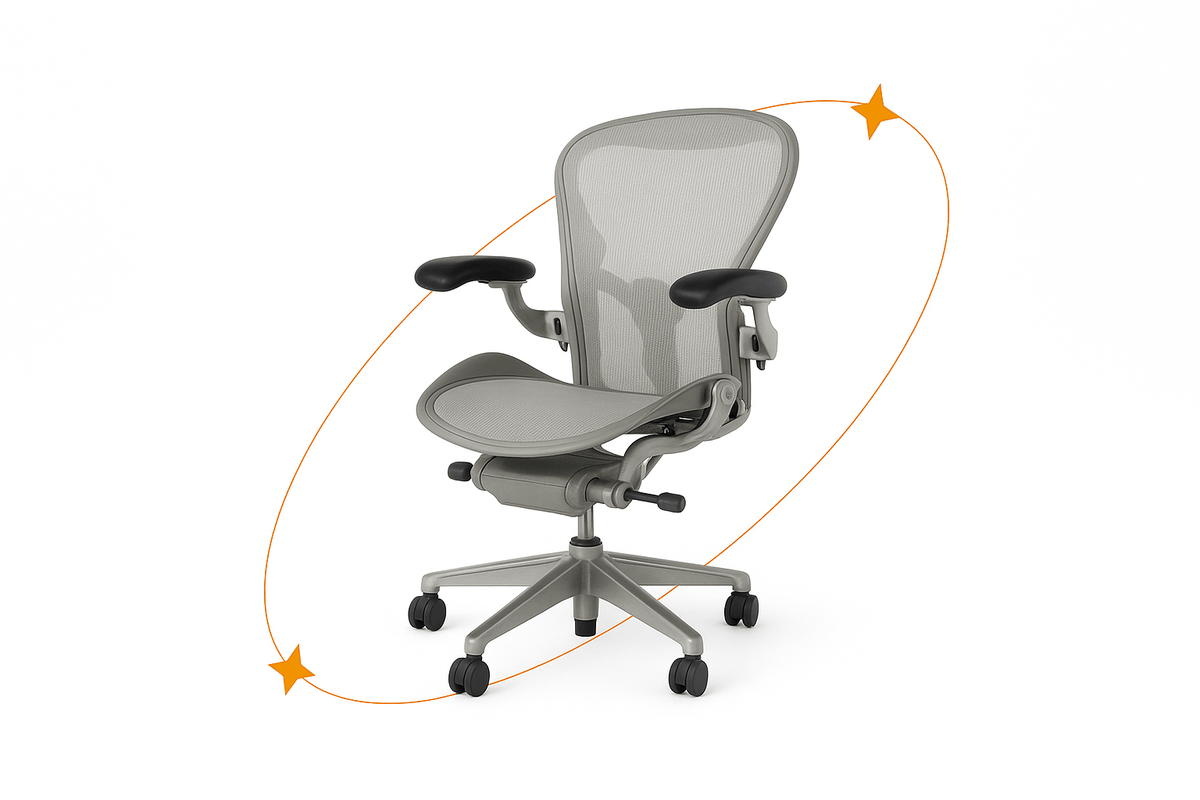
Quality ergonomic chairs typically offer considerably more control over how you sit. Depending on the model, you may get adjustable lumbar support, seat-depth adjustment, multiple armrest positions, recline tension controls, adjustable seat height, and a backrest designed to support different sitting positions.
Premium manufacturers such as Herman Miller, Steelcase, and Humanscale have spent years developing office chairs around these principles.
Of course, there’s an elephant in the room.
Premium office chairs aren’t cheap.
A brand-new high-end ergonomic chair can cost considerably more than the chair sitting in your office right now. If you’re outfitting several workstations, those prices add up quickly.
Fortunately, buying new isn’t your only option.
Refurbished Ergonomic Chairs Can Make Premium Seating More Affordable
Professionally refurbished office chairs offer an alternative for people who want the adjustability and build quality associated with premium office furniture without automatically paying the price of a brand-new chair.
That’s where ERG Office Solutions comes in.
ERG Office Solutions offers refurbished ergonomic office chairs from respected manufacturers such as Herman Miller, Steelcase, Humanscale, and other established office furniture brands.
For Tennessee professionals building a better home office, that can mean upgrading from a basic desk chair to equipment originally designed for serious workplace use. Businesses can also take the same approach when replacing multiple chairs without making the furniture budget look like somebody accidentally added another zero.
More importantly, buying a better chair isn’t simply about having something expensive behind your desk.
It’s about getting the adjustments your body needs.
Your Workspace Should Fit You, Not the Other Way Around
People routinely spend serious money on the tools they use for work. They’ll upgrade to a faster laptop, add another monitor, buy a mechanical keyboard, install a standing desk, and subscribe to half a dozen productivity apps.
Then they’ll spend the entire day sitting in a chair they bought because it was on sale.
If you’re spending 30 or 40 hours a week at a desk, your chair deserves more thought than that.
Start with the equipment you already have. Adjust your chair properly, move your monitor, bring your keyboard closer, and stop spending hours perched on the front edge of your seat. Add more movement to your workday and pay attention to the positions that consistently leave you uncomfortable.
If your chair still feels like something you’d drag out for extra guests at a Tennessee family cookout, it may be time for an upgrade.
A good ergonomic chair won’t magically fix every ache or turn eight hours of sitting into exercise. What it can do is give your body better support, provide more ways to adjust your sitting position, and help create a workstation that actually fits the person using it.
ERG Office Solutions offers refurbished premium ergonomic chairs for people who want better workplace seating without automatically paying brand-new retail prices. A better workday might start with something as simple as finally sitting in the right chair.