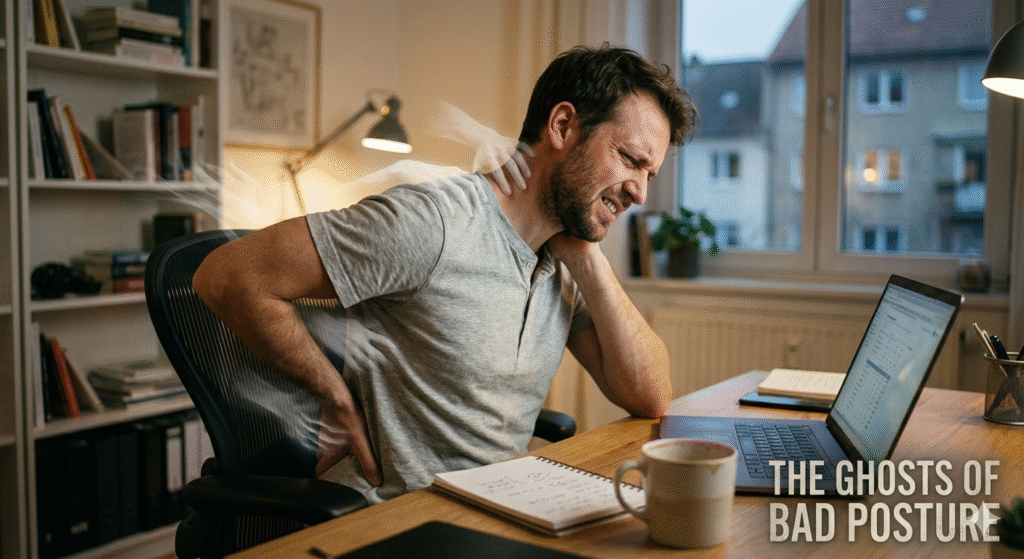
Nobody wakes up one morning and decides, “Today feels like a great day to develop chronic back pain.”
And yet… here we are.
The truth is, most posture problems don’t show up immediately. They creep in slowly, like student loan interest. One day you’re fine, the next day you’re standing up from your chair making noises you didn’t know your body could produce.
Let’s talk about the sitting posture mistakes that feel harmless now—but absolutely make you regret your life choices later.
Mistake #1: The Legendary Slouch-and-Hope Method
You know this posture:
- Head drifting forward
- Shoulders rounding in
- Spine shaped like a sad question mark
It feels comfortable at first because your muscles stop working. Unfortunately, your ligaments take over—and ligaments are terrible at long-term support.
What happens over time:
- Neck and upper-back pain
- Tight chest, weak back muscles
- The slow transformation into “tech neck”
Slouching doesn’t just affect your back—it messes with breathing, focus, and energy levels. You’re basically telling your body, “We give up.”
Mistake #2: Sitting Bolt Upright Like You’re Being Judged
On the opposite end of the spectrum is the “perfect posture” myth.
Chest out. Back straight. Zero movement.
Congratulations—you’ve turned sitting into a full-time workout.
This rigid posture:
- Overworks your spinal muscles
- Increases fatigue
- Leads to tension headaches and stiffness
Good posture is dynamic, not dramatic. If you’re holding yourself upright through sheer willpower, it’s not sustainable—and your body will revolt eventually.
Mistake #3: Chair Too High, Feet Dangling Like a Kid at the Dinner Table
When your chair is too high:
- Feet don’t rest flat
- Pressure builds under your thighs
- Circulation suffers
This leads to numb legs, restless feet, and that lovely pins-and-needles feeling that makes you question your health insurance.
Your feet should be flat on the floor, knees at or slightly below hip level. Anything else is a slow sabotage mission against your lower back and circulation.
Mistake #4: Ignoring Lumbar Support Like It’s Optional
Your lower back has a natural curve. Pretending it doesn’t exist is bold—but misguided.
Without lumbar support:
- Your pelvis tilts backward
- Your spine collapses into flexion
- Your muscles work overtime trying to stabilize you
This is how you end up stretching every 20 minutes and still feeling worse by the end of the day.
Chairs that lack proper lumbar support—or cheap chairs that offer a “one-size-fits-nobody” bump—set you up for long-term discomfort.
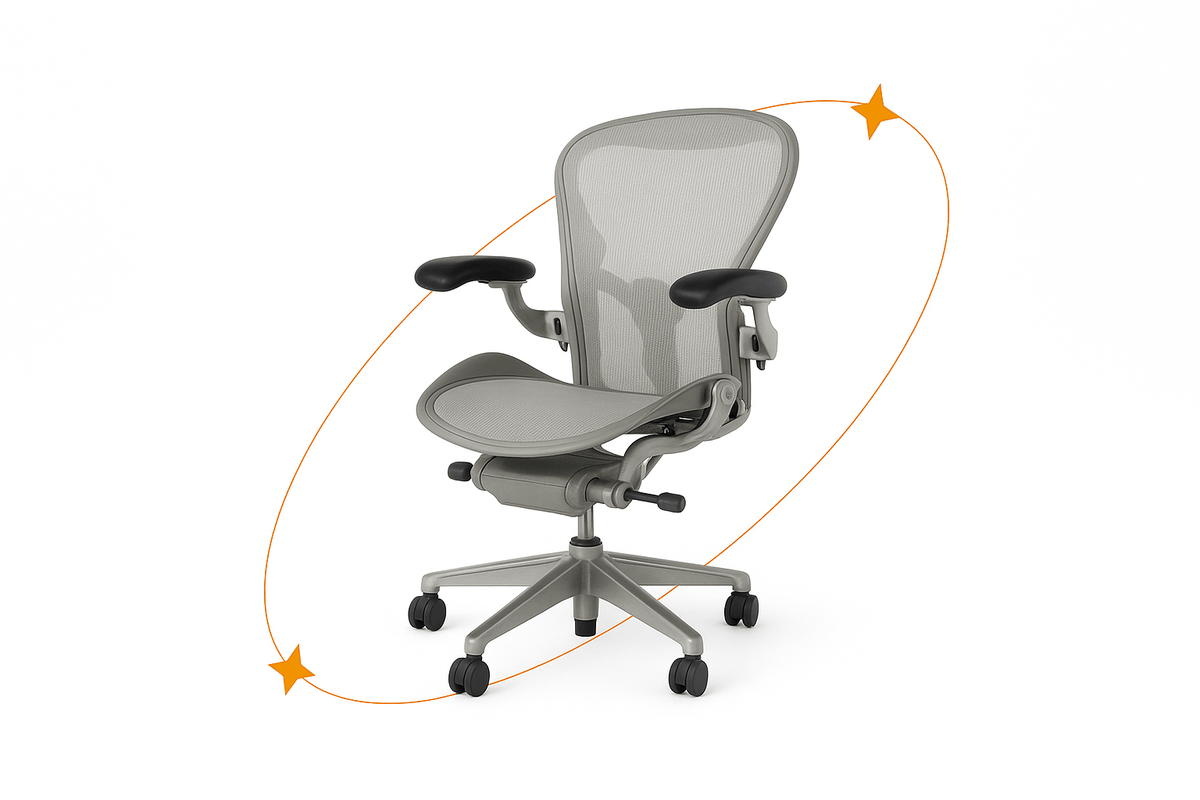
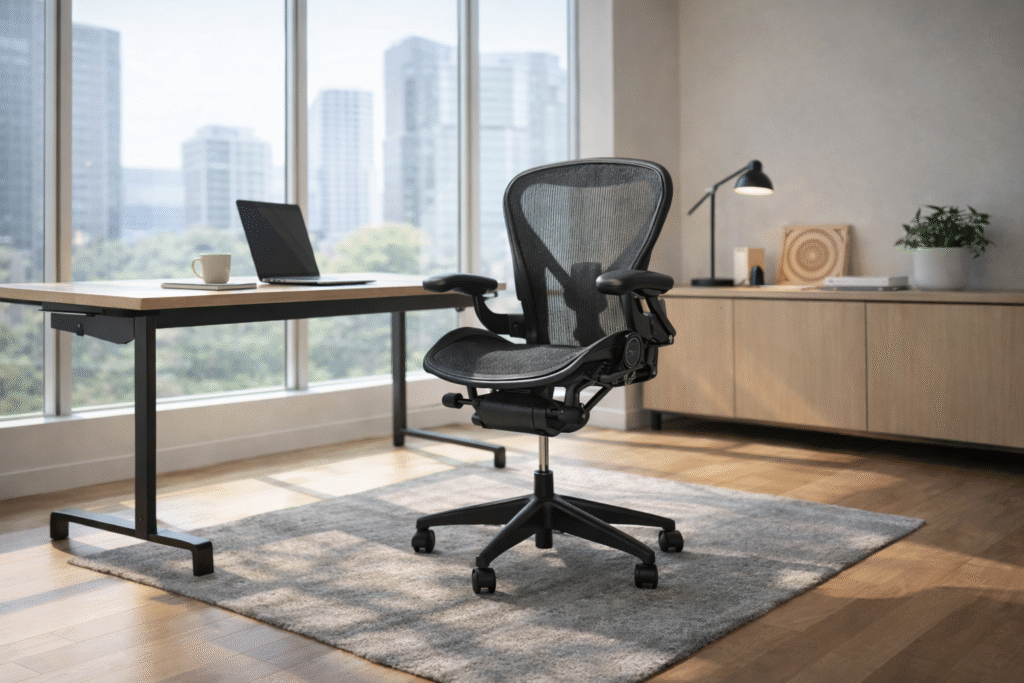
This is exactly why ergonomic designs like the Herman Miller Aeron are famous: they support the pelvis and spine automatically, instead of asking your muscles to do unpaid labor all day.
Mistake #5: Perching on the Edge of Your Seat Like a Nervous Squirrel
If you’re sitting forward with:
- No back contact
- Weight dumped into your lower spine
- Shoulders creeping upward
You’re not “engaged.” You’re stressed.
This posture loads your spinal discs and forces your core and back muscles to stabilize constantly. It’s exhausting—and it usually happens when your chair doesn’t feel supportive enough to lean back into.
A good chair should invite you to sit all the way back, not make you hover like you’re ready to flee.
Mistake #6: Armrests Set to “Shoulder Shrug Mode”
Armrests are supposed to help. Instead, many people unknowingly turn them into shoulder destroyers.
Common errors:
- Armrests too high → shoulders tense up
- Too low → you collapse inward
- Too wide → neck strain and asymmetry
Proper armrest height keeps your shoulders relaxed and elbows comfortably bent around 90 degrees. If you feel tension building in your neck by mid-afternoon, your armrests are probably guilty.
Mistake #7: Sitting Still for Hours Like a Decorative Object
Even perfect posture becomes bad posture if you never move.
Human bodies thrive on:
- Small shifts
- Micro-movements
- Occasional recline and reset
When you lock yourself into one position for hours, blood flow drops and muscles stiffen. This is why high-end ergonomic chairs—again, shoutout to the refurbished Herman Miller Aeron—are designed to move with you instead of forcing you into one static pose.
Movement isn’t a failure of posture. It’s the goal.
The Real Regret Isn’t Sitting—It’s Sitting Wrong for Years
Most posture damage isn’t dramatic. It’s quiet. Gradual. Inconvenient.
It shows up as:
- Chronic back pain
- Stiff hips
- Neck tension
- Fatigue that coffee can’t fix
The fix isn’t extreme. It’s thoughtful:
- Adjust your chair properly
- Support your spine
- Recline a little
- Move often
- Use a chair built for long hours—not short-term survival
Because future-you shouldn’t have to pay for present-you’s bad sitting habits.
Trust me: your spine has a long memory.